

Why it matters when buying land
If the minerals under your parcel belong to someone else, that owner may have the legal right to access the surface to explore and extract — in most states the mineral estate is “dominant” over the surface estate. That can mean drill pads, access roads, and pipelines on land you bought for a quiet homesite.
Severed minerals are especially common in energy-producing regions, where rights may have been sold off generations ago without any note in recent deeds.
On the other side of the ledger, intact mineral rights can add real value, producing lease bonuses and royalty income if resources are ever developed.
How to check it
Mineral ownership rarely appears in standard listing data. Land Owl's parcel ownership data shows the county-verified surface owner of record, which is the starting point for tracing the chain of title.
Order a title search and ask specifically about mineral reservations — a standard owner's title policy often excludes minerals, so in energy states you may need a dedicated mineral title examination by an attorney or landman.
Check the deed history at the county recorder for language like “reserving unto grantor all oil, gas and minerals.” Once severed, mineral rights stay severed until someone deliberately reunites the two estates.
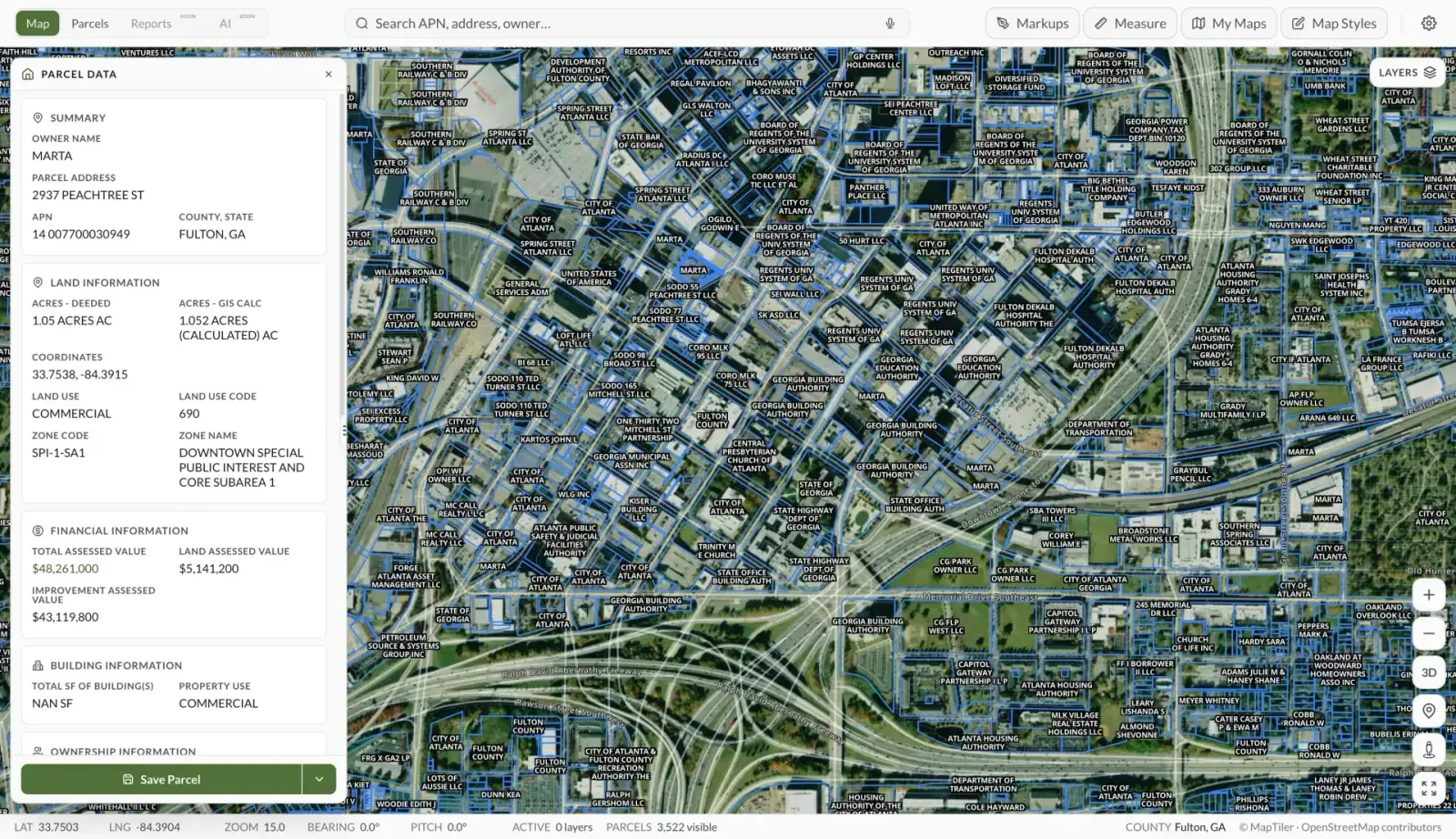
See it on a real parcel
Land Owl overlays zoning, ownership, flood risk, and more on every parcel — before you commit a dollar.
What does it mean when mineral rights are severed?
Severance happens when a past owner sells or reserves the minerals separately from the surface, splitting one property into two estates with different owners. From then on the surface trades without the minerals — and later buyers are often never told.
Severance is permanent until the two estates are reunited by purchase or inheritance.
Can a mineral owner drill on my land?
In most states, yes — the mineral estate generally carries an implied right to use as much of the surface as is reasonably necessary to extract the minerals. Many states have surface-owner protection laws requiring notice, negotiation, or compensation, and operations are often governed by negotiated surface-use agreements.
The specifics vary significantly by state, so get local legal advice before buying land with severed minerals in an active energy area.
Are mineral rights worth anything?
It depends entirely on geology and market activity. In active oil and gas plays, mineral acres can be worth more than the surface itself, generating lease bonuses and production royalties; in areas with no resource potential they add little beyond peace of mind.
Local leasing activity is the best practical signal of value.
Do mineral rights transfer automatically when land is sold?
Only the rights the seller actually owns can transfer — and only if the deed does not reserve them. If the minerals were severed decades ago, the seller cannot convey them no matter what the contract says.
If the seller does own them, make sure the deed explicitly includes them, because a new reservation clause can sever them at your own closing.