
Why it matters when buying land
Easements cut both ways for a land buyer. An easement benefiting your parcel — like a recorded driveway across a neighbor's property — can be the only thing making the land usable; an easement burdening it, like a utility corridor through the middle, can restrict where you can build.
Because easements are recorded against the property rather than the owner, you inherit existing easements at closing whether or not the seller mentioned them.
Knowing exactly which easements exist — and where they sit on the ground — is a core part of land due diligence.
How to check it
Order a title search or a title insurance commitment — recorded easements appear as exceptions in the title report. This is the authoritative source.
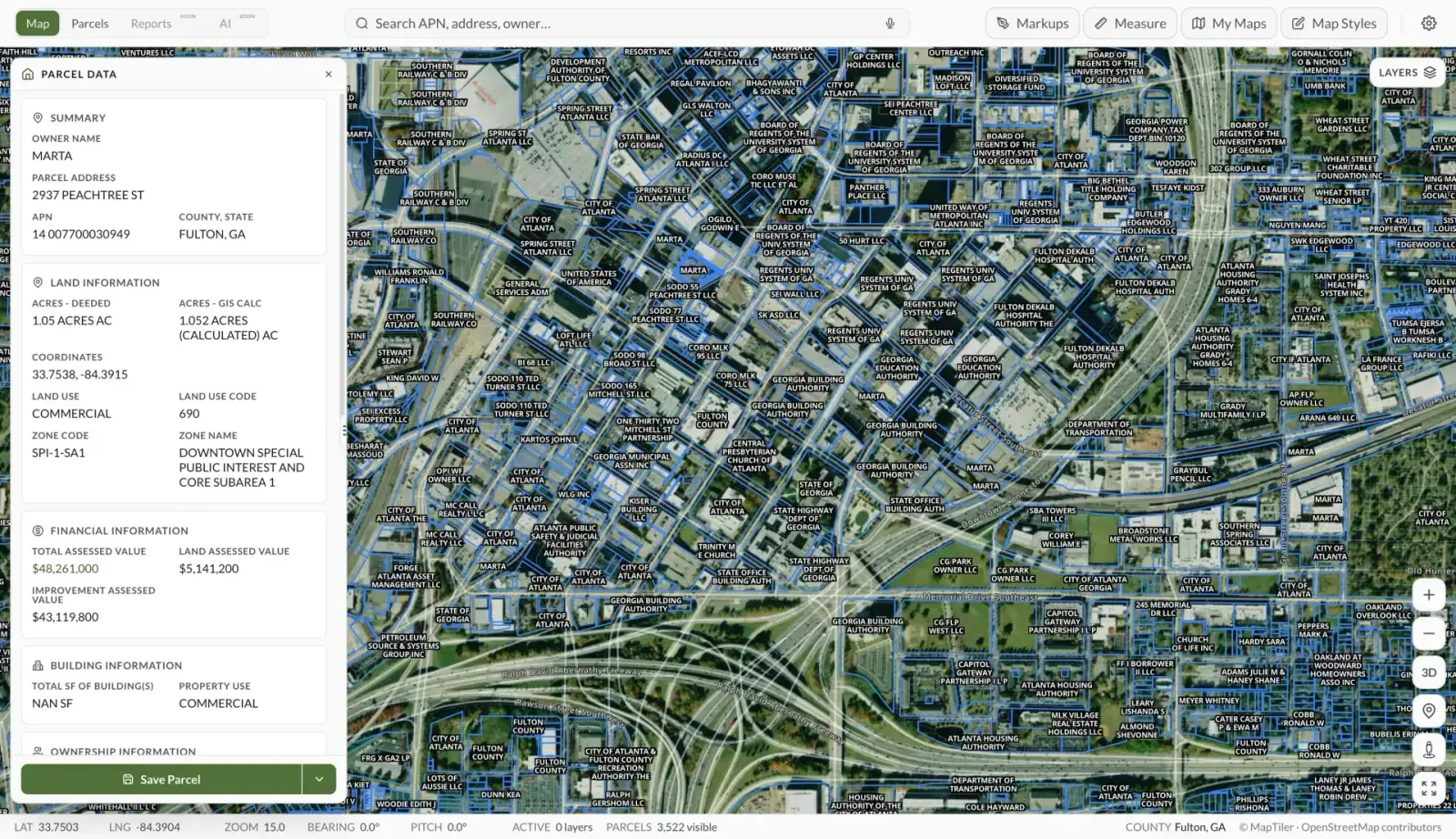
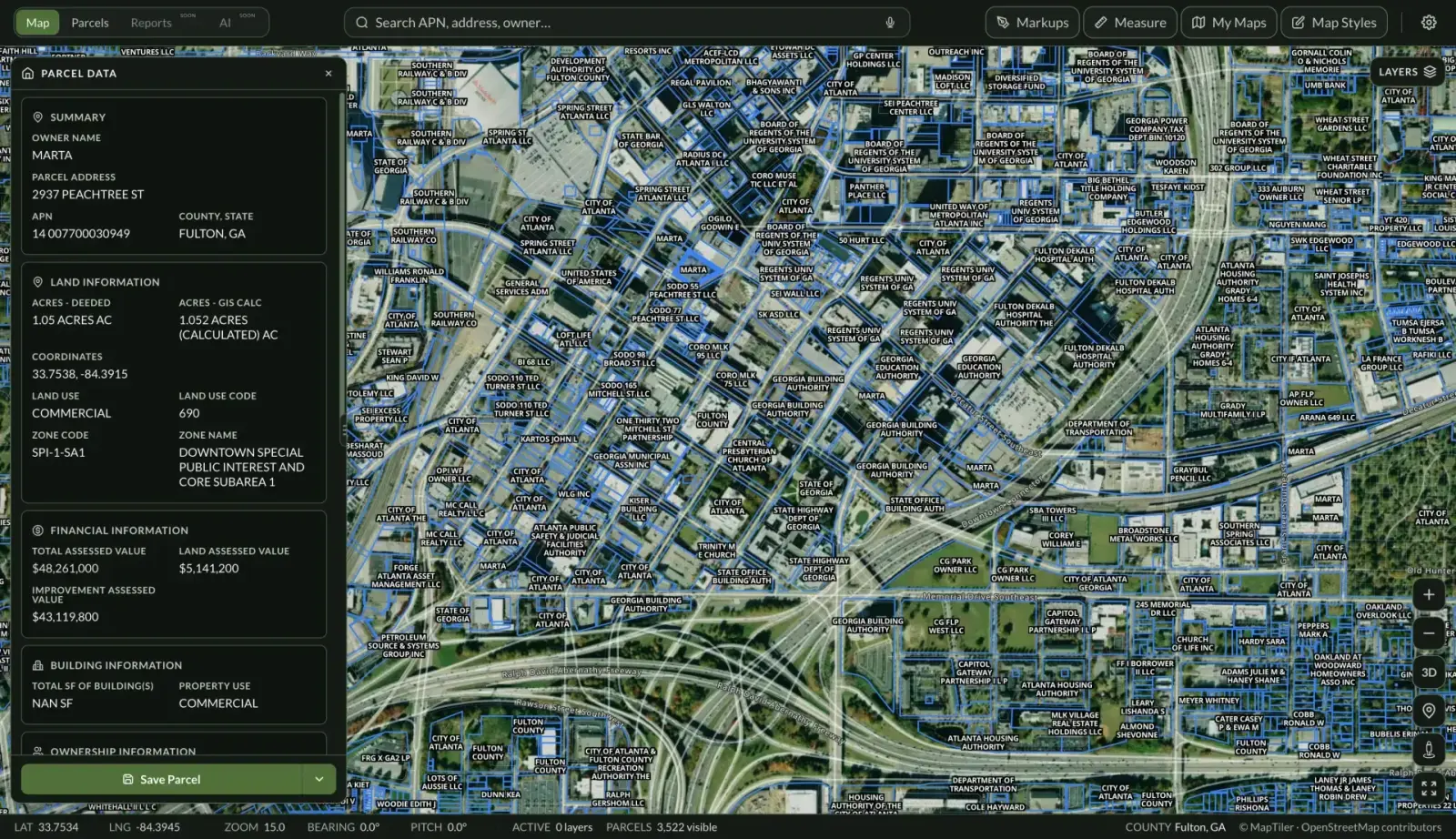
Review the deed, the plat map, and any survey of the property; many easements are drawn directly on recorded plats. In Land Owl, the parcel boundaries on the map show how a parcel relates to roads and neighboring parcels — useful context for spotting where access or utility easements are likely to run.
Walk the land and look for physical clues: power lines, buried-pipeline markers, worn driveways, and drainage channels often indicate easements, including some that were never properly recorded.
See it on a real parcel
Land Owl overlays zoning, ownership, flood risk, and more on every parcel — before you commit a dollar.
What are the most common types of easements?
Access (ingress/egress) easements let an owner cross another parcel to reach their land. Utility easements give power, water, gas, and telecom companies the right to install and maintain lines. Drainage easements route stormwater across a property, and conservation easements permanently restrict development in exchange for tax benefits.
Easements are also classified as “appurtenant” (attached to a neighboring parcel) or “in gross” (held by a person or company, like a utility).
Does an easement reduce property value?
It depends on which side of it you are on. An easement that burdens your land — especially one crossing a prime building site — typically reduces value and limits layout options. An easement that benefits your land, like guaranteed road access, adds value and can be essential to the parcel being usable at all.
Can an easement be removed or moved?
Sometimes, but rarely unilaterally. Easements can end by written release from the holder, by merger (one party acquires both properties), by abandonment, or by their own expiration terms. Relocating an easement generally requires agreement from both parties.
The rules vary by state — assume an existing recorded easement is permanent unless a real estate attorney tells you otherwise.
Who maintains an easement?
By default, the party benefiting from the easement usually bears maintenance — for example, the neighbor using a driveway easement typically maintains the driveway. Well-drafted easement agreements spell out maintenance and cost-sharing; older or implied easements often do not, which is a common source of neighbor disputes.