
Why it matters when buying land
When you buy land you inherit its recorded history, good and bad. A mortgage the seller never paid off, a tax lien, an easement through the building site, or a break in the chain of ownership all follow the land — and all of them surface in a competent title search.
Vacant land is especially prone to title problems: parcels pass through estates without proper probate, get sold on unrecorded contracts, or carry severed mineral or timber rights. The cheaper and more rural the land, the more skeptical the title review should be.
A clean search — backed by title insurance — is what turns "the seller says they own it" into something a buyer and lender can rely on.
How to check it
Order the search through a title company, abstractor, or real estate attorney as part of escrow — the standard product is a title insurance commitment listing the owner of record, liens to be paid off, and the exceptions (easements, restrictions, mineral reservations) that will survive closing. This professional search is the one to rely on; doing it properly takes training and access to decades of records.
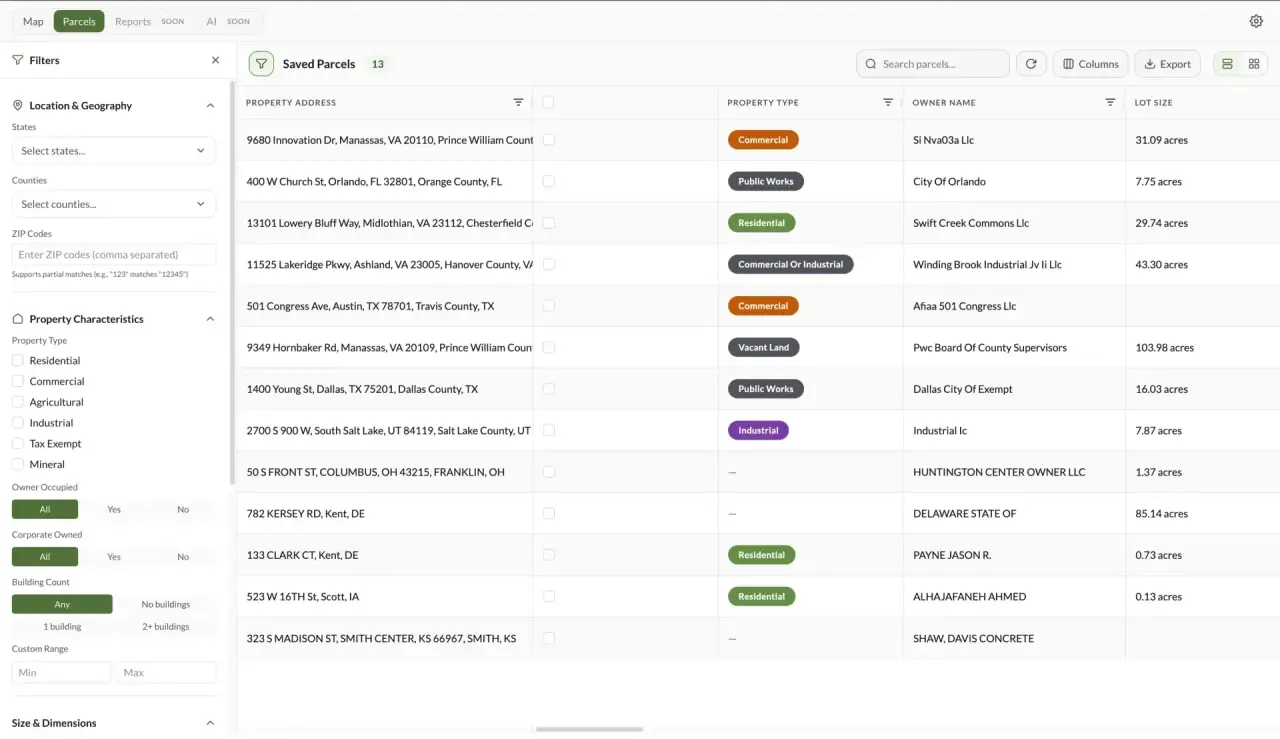
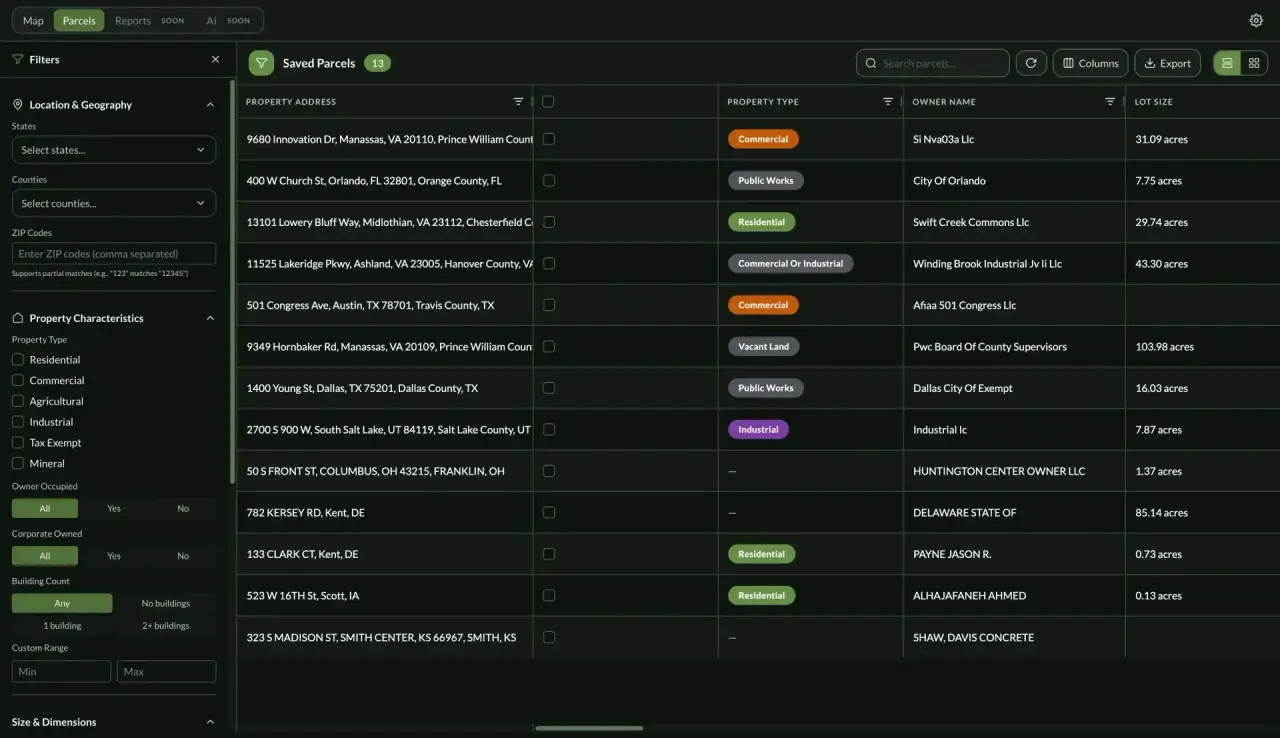
Before you get that far, Land Owl's parcel ownership data shows the current owner of record for a parcel — a useful starting point for confirming who you are actually dealing with and researching a property, though it is not a substitute for a full title search.
When the commitment arrives, read Schedule B — the exceptions list — line by line. That is where the easements, restrictions, and reservations that will bind you after closing live, and it is the part buyers most often skip.
See it on a real parcel
Land Owl overlays zoning, ownership, flood risk, and more on every parcel — before you commit a dollar.
How much does a title search cost?
A standalone search on a straightforward property commonly runs roughly $75 to $250, with complex rural or multi-chain searches costing more. When ordered as part of a title insurance policy, the search cost is typically folded into the overall title fees, which scale with the purchase price.
Prices vary by state and provider — some states have regulated rates, others are fully competitive — so quotes are worth getting. Against the cost of a missed lien, it is among the cheapest insurance in the transaction.
How long does a title search take?
A few days to two weeks is typical for most properties, depending on the county's records and the property's history. Counties with digitized records turn searches around fast; rural counties with paper indexes, or properties with long and tangled chains of title, take longer.
Build the timeline into your contract — a title contingency period gives you the right to object to problems the search uncovers and walk away if they cannot be cured.
What does a title search reveal?
The chain of title (the sequence of recorded owners), open mortgages and deeds of trust, tax status, judgment and mechanic's liens, recorded easements and rights-of-way, deed restrictions and CC&Rs, and reservations of mineral or timber rights. It also flags gaps or defects in the chain that could cloud ownership.
What it cannot reveal are unrecorded problems — boundary disputes, unrecorded easements, fraud, or heirs with claims that never hit the record. That gap is precisely what title insurance exists to cover.
Do I need a title search when buying land for cash?
Yes — arguably more than ever. A lender forces title work on financed deals to protect its lien; in a cash deal nobody forces it, so the buyer who skips it absorbs all the risk of liens, easements, and ownership defects personally.
Cash purchases of cheap rural land are where skipped title work does the most damage, because those parcels are the most likely to carry quiet problems. A search plus an owner's title insurance policy is the standard protection, whatever the price of the land.