
Why it matters when buying land
CC&Rs can restrict almost anything zoning allows: minimum house size, architectural style, whether you can park an RV, keep livestock, hunt, run a business, or place a mobile home. Buyers drawn to rural land for freedom are often surprised to find a recorded covenant from a 1990s subdivision still controls what they can do.
Because CC&Rs run with the land, you inherit them at closing whether or not anyone mentioned them. Violating them can mean fines, forced removal of structures, or lawsuits from the HOA or neighbors.
They are not always bad — sensible covenants protect property values by keeping a junkyard from appearing next door. The point is to read them before you buy, not after.
How to check it
Order a title search or title insurance commitment — recorded CC&Rs will appear as exceptions, with the recording reference you need to pull the full document. This is the authoritative check; there is no shortcut.
Get the complete declaration from the county recorder (or the title company) and read it, along with any amendments. If there is an HOA, request its current rules, budget, and any record of violations on the parcel.
Be alert on land inside platted subdivisions even when no HOA is active — covenants can remain enforceable by neighboring owners long after the association has gone dormant.
See it on a real parcel
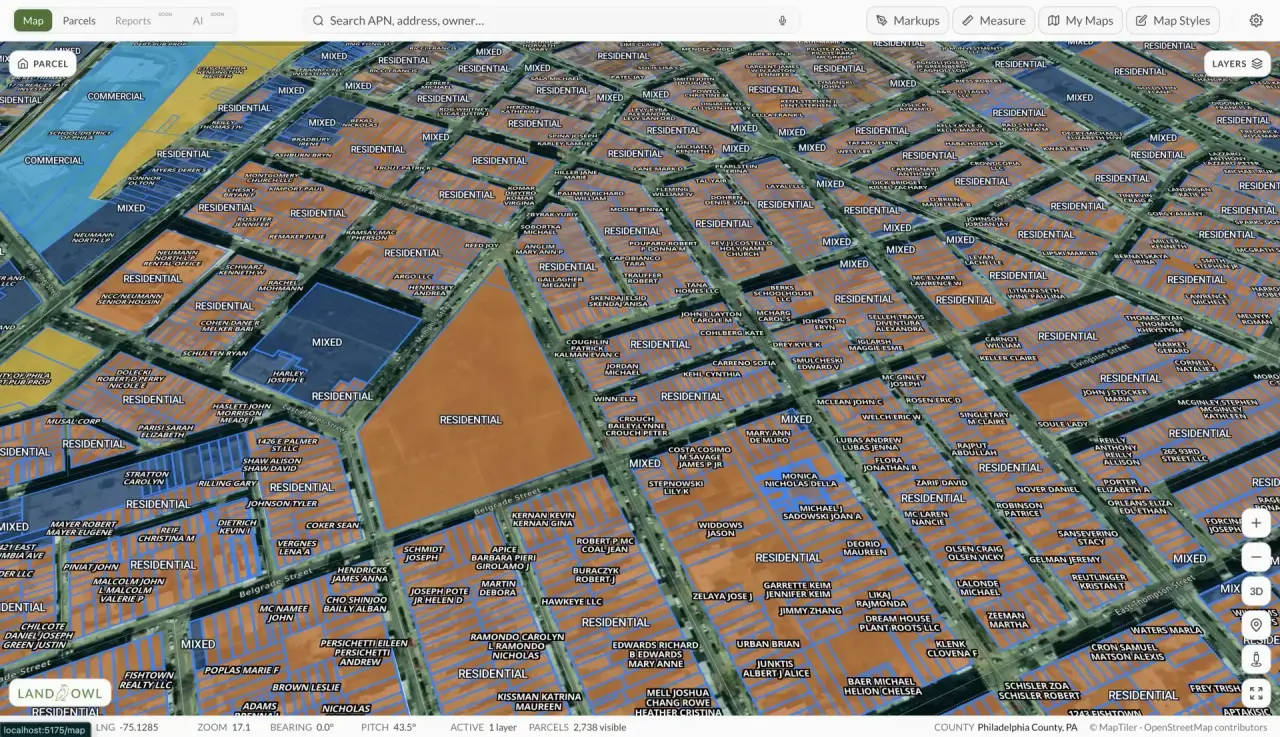
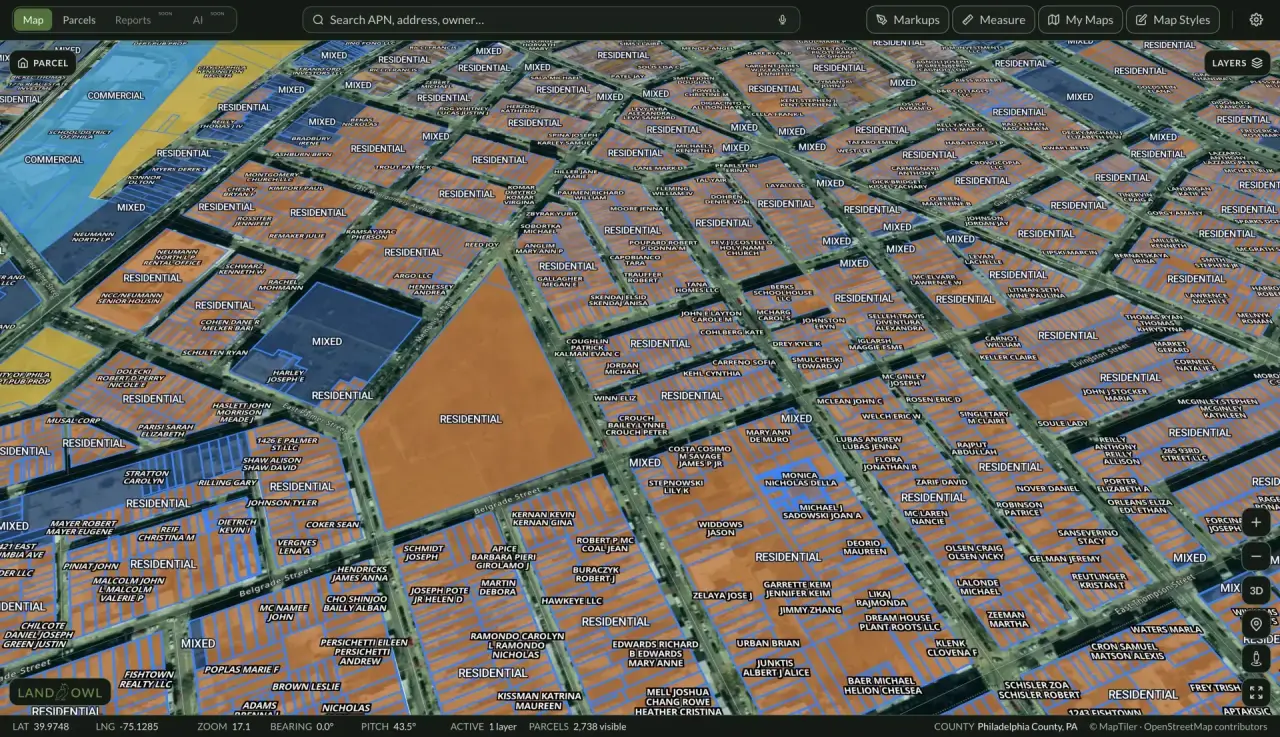
Land Owl overlays zoning, ownership, flood risk, and more on every parcel — before you commit a dollar.
What do CC&Rs typically restrict on rural land?
Common provisions on acreage subdivisions include minimum dwelling sizes, bans on mobile or manufactured homes, limits on outbuildings, restrictions on livestock and poultry, no commercial activity, no junk vehicles, and resubdivision limits. Some also impose architectural review, requiring approval of plans before you build.
Every declaration is different — the only way to know what applies is to read the recorded document for that specific subdivision.
Are CC&Rs legally enforceable?
Generally yes. Properly recorded covenants are enforceable by the HOA and usually by other lot owners in the same subdivision, through fines (where authorized), injunctions, and damage awards.
There are limits: provisions that are discriminatory, against public policy, or abandoned through long, widespread non-enforcement may be struck down, and some states impose expiration or renewal requirements on old covenants. Whether a stale covenant is still enforceable varies by state — assume it is until an attorney says otherwise.
Can CC&Rs be changed or removed?
Usually only by a vote of the affected owners — declarations typically specify an amendment threshold such as a majority or two-thirds of lots. A single owner cannot opt out unilaterally.
Some covenants expire by their own terms after a set period unless renewed, and some states have marketable title laws that extinguish ancient restrictions. Practically, though, treat recorded CC&Rs as permanent when deciding whether to buy.
What is the difference between CC&Rs and zoning?
Zoning is public regulation imposed by local government; CC&Rs are private restrictions created by a developer or owners and recorded against the land. Both apply at once, and the stricter rule wins — zoning may allow a use that the covenants prohibit, or vice versa.
Zoning can change through public processes like rezonings and variances; CC&Rs change only through their own private amendment terms. You must clear both layers before counting on any use of the land.