
Why it matters when buying land
Subdividing is how raw acreage becomes sellable lots, and it is where much of the value in land development is created. A tract worth one price as a single parcel can be worth substantially more as approved, buildable lots — but only after surviving an approval process that costs real time and money.
The rules also run in reverse: if a lot you are buying was split off without going through the required process, it may be an illegal lot that the county will refuse to issue building permits for. Verifying a lot was legally created is a core title and due-diligence question.
For buyers of larger tracts, the right to subdivide later — governed by zoning, road access, and minimum lot sizes — is a major component of the land's long-term value.
How to check it
Ask the local planning or zoning department what the parcel's zoning district allows: minimum lot size, road frontage requirements, and whether a split qualifies as a minor or major subdivision. The county's subdivision ordinance sets the process, and staff can usually tell you quickly whether a proposed split is plausible.
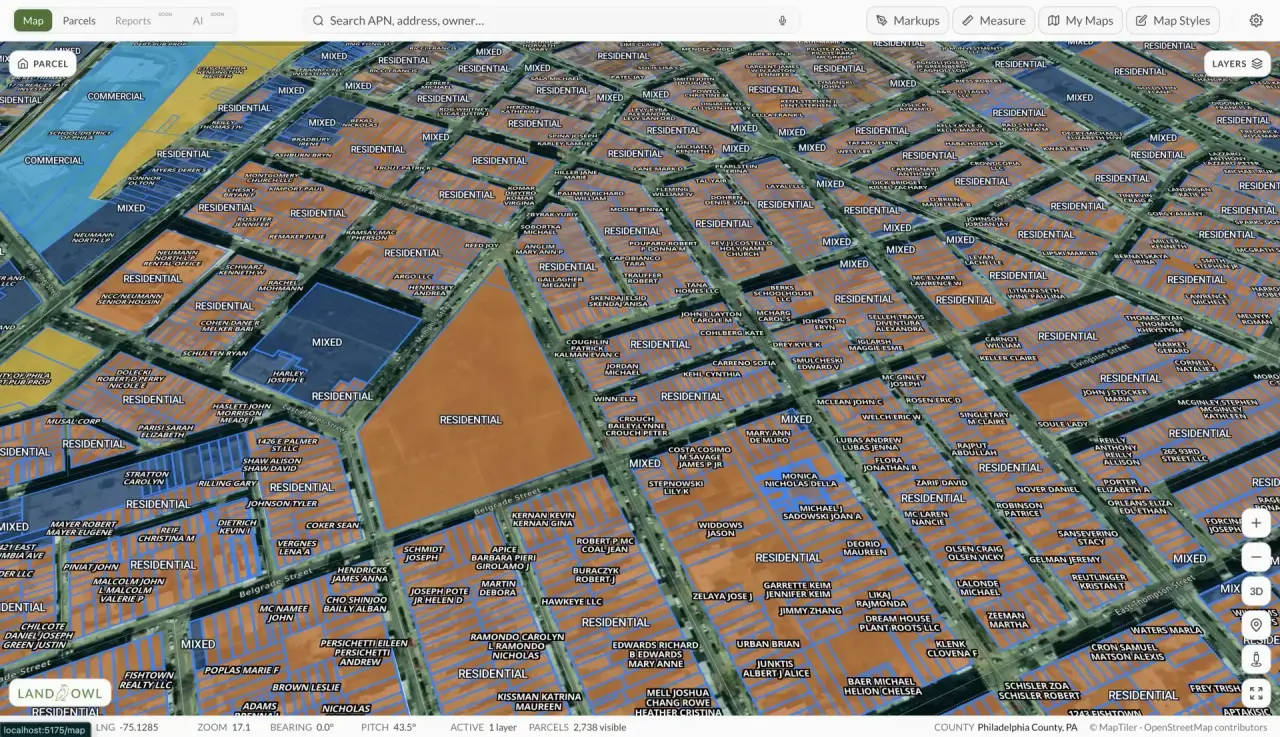
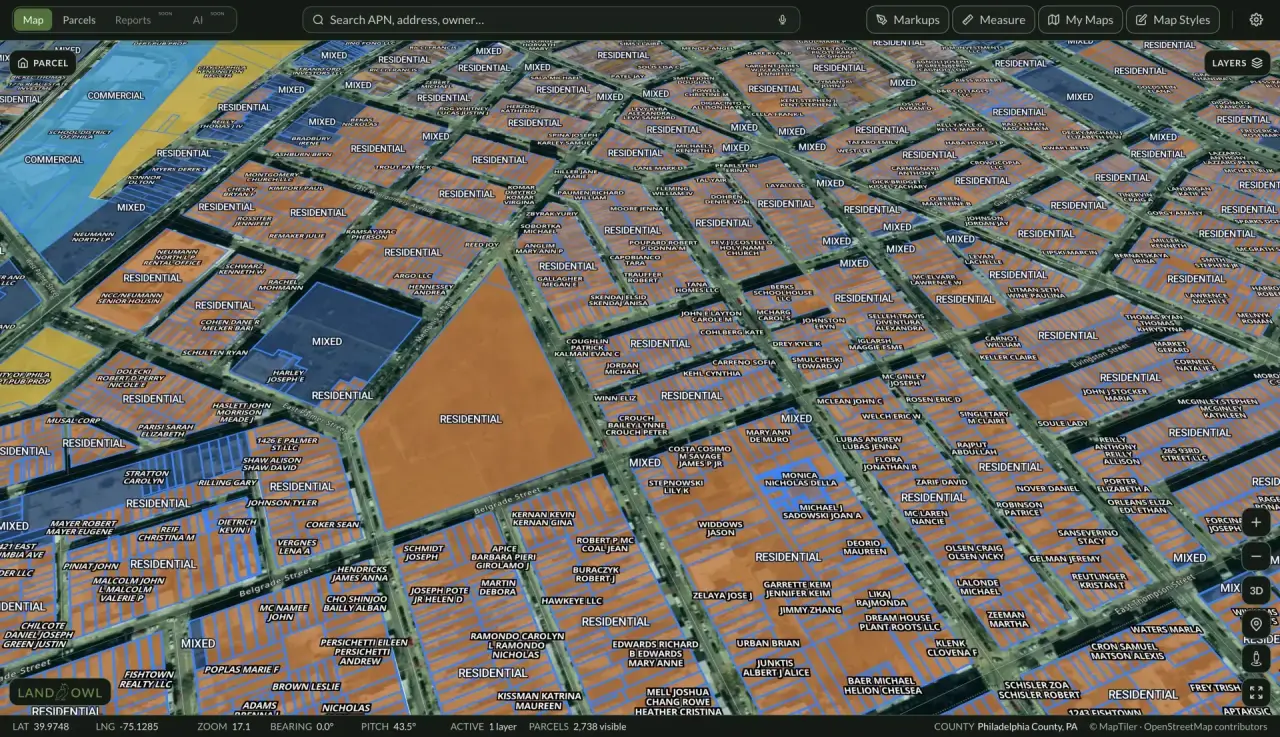
In Land Owl, the zoning layer shows the parcel's zoning district — the starting point for minimum lot sizes — and the parcel boundaries on the map show the tract's shape and road frontage, both of which drive how many conforming lots it could yield.
To confirm an existing lot was legally created, pull the recorded plat or deed history from the county recorder; a title company can verify whether the lot complies with the subdivision regulations in force when it was created.
See it on a real parcel
Land Owl overlays zoning, ownership, flood risk, and more on every parcel — before you commit a dollar.
What is the subdivision process for land?
In broad strokes: a surveyor prepares a preliminary plat showing proposed lots, roads, and drainage; the planning department and often a planning commission review it against zoning and subdivision standards; required improvements like roads and utilities are built or bonded; and a final plat is approved and recorded, legally creating the lots.
Along the way you may need soil evaluations, drainage studies, road plans, and utility commitments. The sequence and names vary by jurisdiction, but recording the final plat is almost always the step that makes the lots real.
What is the difference between a minor and a major subdivision?
Most jurisdictions fast-track small splits — commonly two to four or five lots with no new road — as minor subdivisions with administrative review. Larger splits, or anything requiring new streets or infrastructure, go through the full major-subdivision process with public hearings and engineered improvement plans.
The thresholds and exemptions (family transfers, large-acreage splits) vary widely by state and county, so check the local ordinance before assuming a quick split is available.
How much does it cost to subdivide land?
A simple minor split with existing road frontage may cost a few thousand dollars in survey, application, and recording fees. A major subdivision with new roads, drainage, and utility extensions runs into the tens or hundreds of thousands — improvement construction is usually the dominant cost, not the paperwork.
Time is a cost too: minor splits can close in weeks, while major subdivisions commonly take a year or more from application to recorded plat.
Can any parcel be subdivided?
No. Zoning minimum lot sizes, road frontage and access requirements, septic feasibility on each proposed lot, and physical constraints like floodplains, wetlands, and steep slopes all limit how — and whether — a tract can be split. Deed restrictions or CC&Rs can prohibit further subdivision outright even where zoning would allow it.
Some rural jurisdictions also limit how many splits a parcel can undergo in a given period. The realistic lot yield of a tract is a question to answer before buying, not after.