Why it matters when buying land
Zoning is the single biggest legal constraint on what you can do with land. It determines whether you can build a house, place a manufactured home, run livestock, split the parcel, or operate a business — all decided before you spend a dollar on the property.
Buying land that is not zoned for your intended use is one of the most expensive mistakes in land investing. Rezoning is possible but slow, political, and never guaranteed.
Zoning also shapes value: a parcel zoned for denser use, or sitting in the path of a zoning change, can be worth multiples of its farm-zoned neighbor.
How to check it
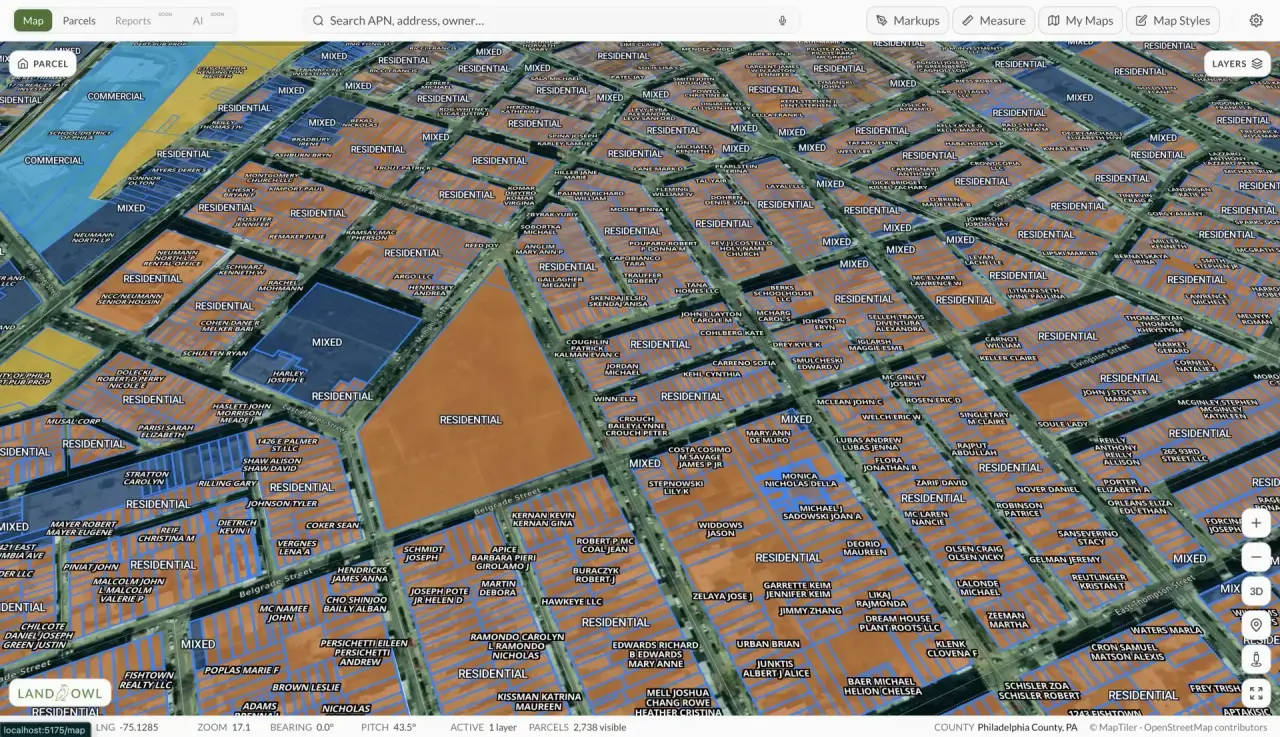
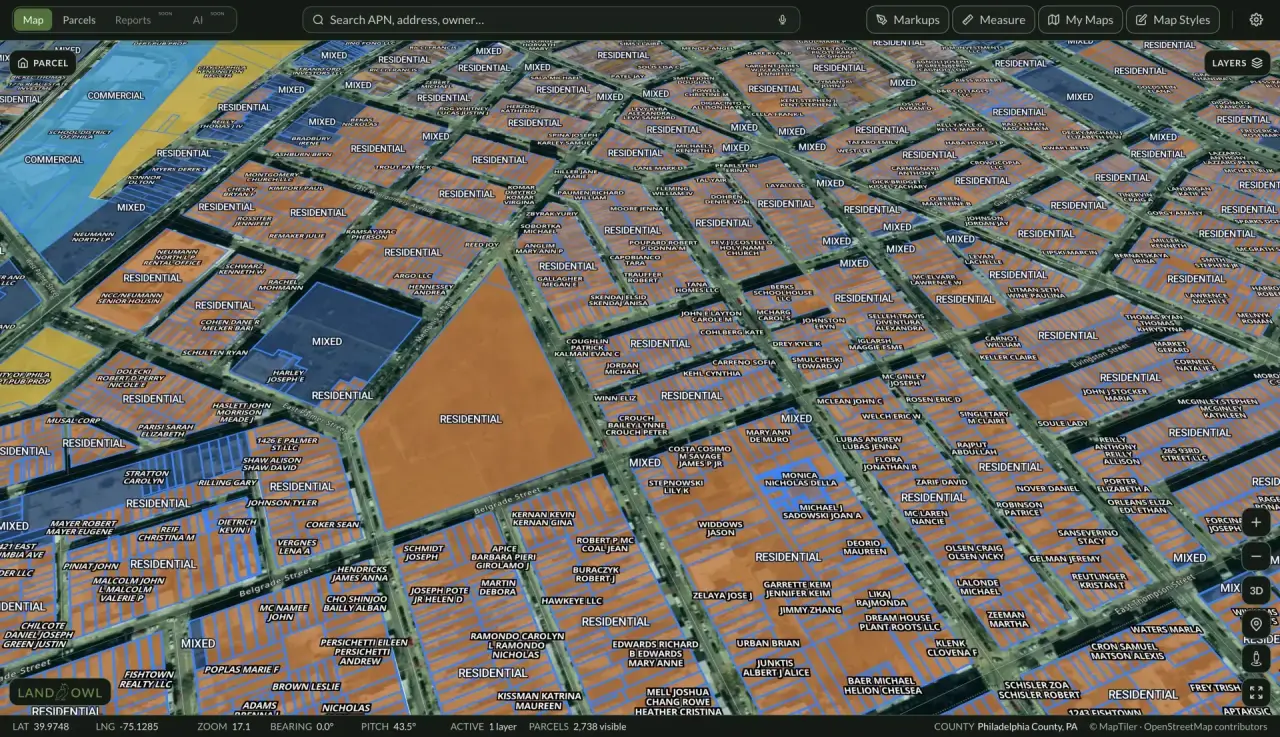
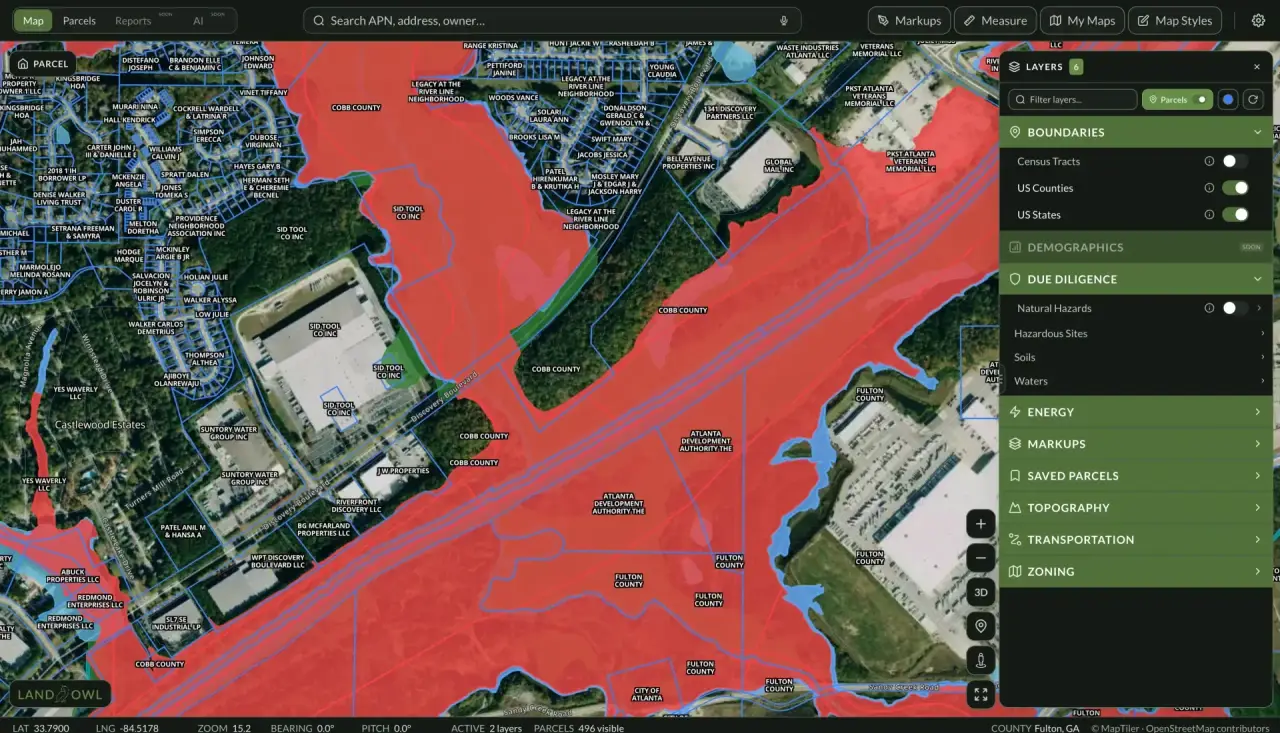
Check the parcel's designation in Land Owl's zoning layer, which maps zoning districts directly onto parcels so you can see a property's zoning and how the neighboring land is zoned.
Then read the actual ordinance: a district code like R-1 or AG-2 is only a label, and the permitted uses, minimum lot sizes, and setbacks behind it live in the county or city zoning ordinance, usually published online.
For anything decision-critical, confirm with the local planning or zoning department — staff can tell you about pending changes, overlay districts, and whether your intended use needs a permit, conditional approval, or a variance.
See it on a real parcel
Land Owl overlays zoning, ownership, flood risk, and more on every parcel — before you commit a dollar.
What are the main zoning categories?
Most jurisdictions use some version of residential, agricultural, commercial, industrial, and mixed-use districts, each subdivided by intensity — for example, R-1 single-family versus R-3 multifamily. Many counties add overlay districts (floodplain, historic, airport) that layer extra rules on top of the base district.
The labels and definitions vary by jurisdiction, so never assume an “R-1” in one county means the same thing in another.
Can zoning be changed?
Yes — through a rezoning (changing the district), a variance (relief from a specific standard), or a conditional or special-use permit (allowing a listed exception). All involve public hearings and discretionary approval, and the process typically takes months.
Buying land on the assumption it can be rezoned is speculative; sophisticated buyers make the purchase contingent on approval.
What does it mean if land is unzoned?
Some rural counties have no county-level zoning at all, meaning land use is largely unrestricted locally. That freedom cuts both ways: you can build what you want, and so can the neighbor next door.
Other rules — septic and well permits, floodplain regulations, state environmental law — still apply even where zoning does not.
What happens if a property violates zoning?
Existing violations become the new owner's problem at closing. Counties can deny permits, levy fines, or order structures removed. Some older uses are protected as “legal nonconforming” (grandfathered), but that protection is narrow and can be lost if the use stops or the structure is rebuilt — verify status with the zoning office before buying.