Why it matters when buying land
Land in the path of a planned road widening, transmission line, or pipeline carries a risk most listings never mention: part or all of it may be taken, on the government's timeline, at a price you may have to fight for. Even a partial taking — a strip for a highway — can reshape access, split a parcel, or consume the best building site.
A pending or rumored project also chills value long before any taking happens, since informed buyers discount land with condemnation exposure.
The flip side: compensation is constitutionally required, and owners who understand the process and get their own appraisal frequently recover more than the initial offer.
How to check it
Eminent domain risk is checked through public records and planning documents, not a map layer. Ask the county and the state department of transportation about planned road projects near the parcel, and review the local comprehensive plan and capital improvement program for corridors, utilities, or facilities that touch it.
A title search will reveal past takings and recorded rights-of-way or utility easements on the parcel — existing corridors are a clue that future expansions could follow the same path.
If a project is already announced, contact the acquiring agency directly to learn the proposed footprint and timeline, and talk to a condemnation attorney before negotiating anything.
See it on a real parcel
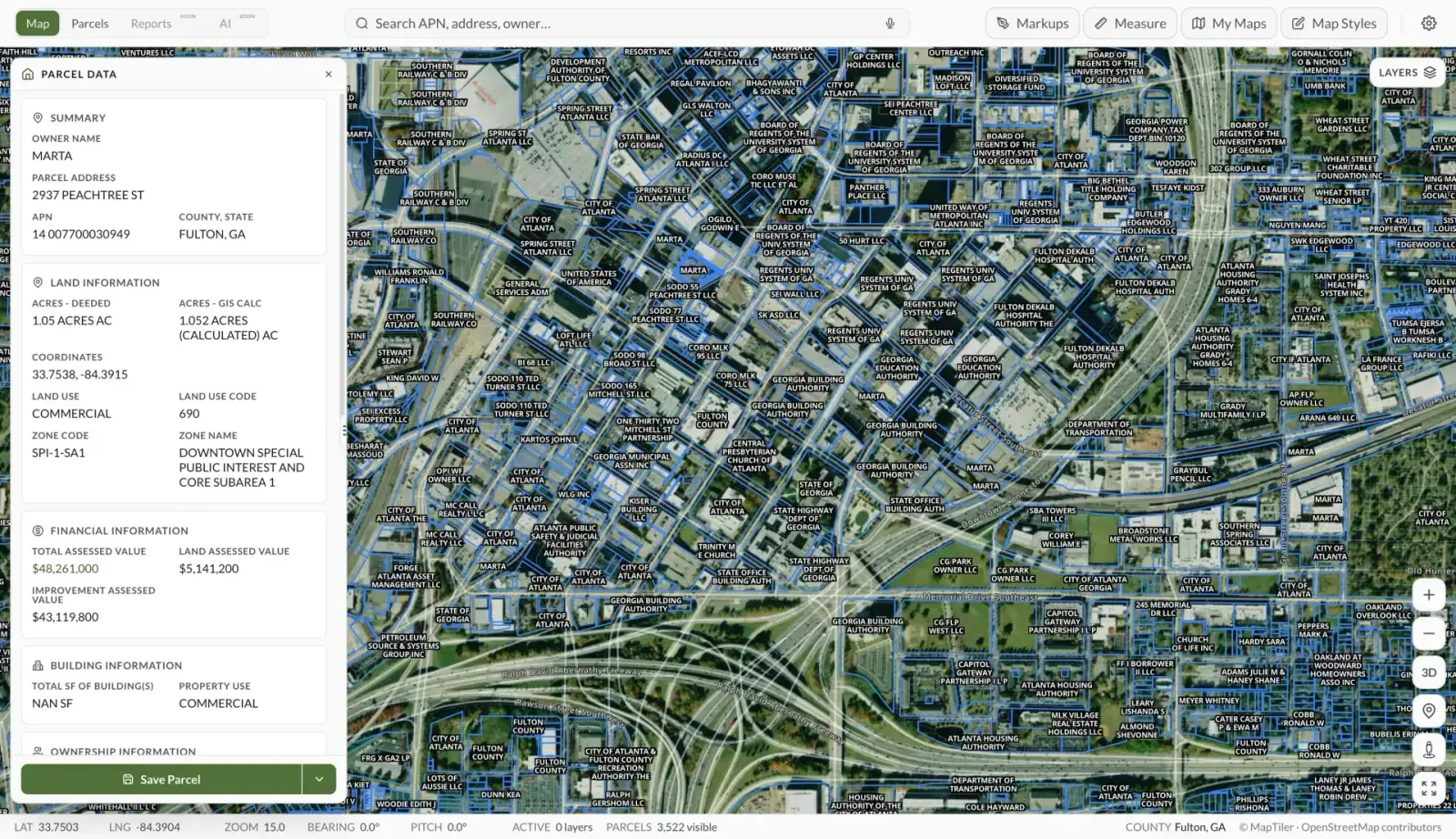
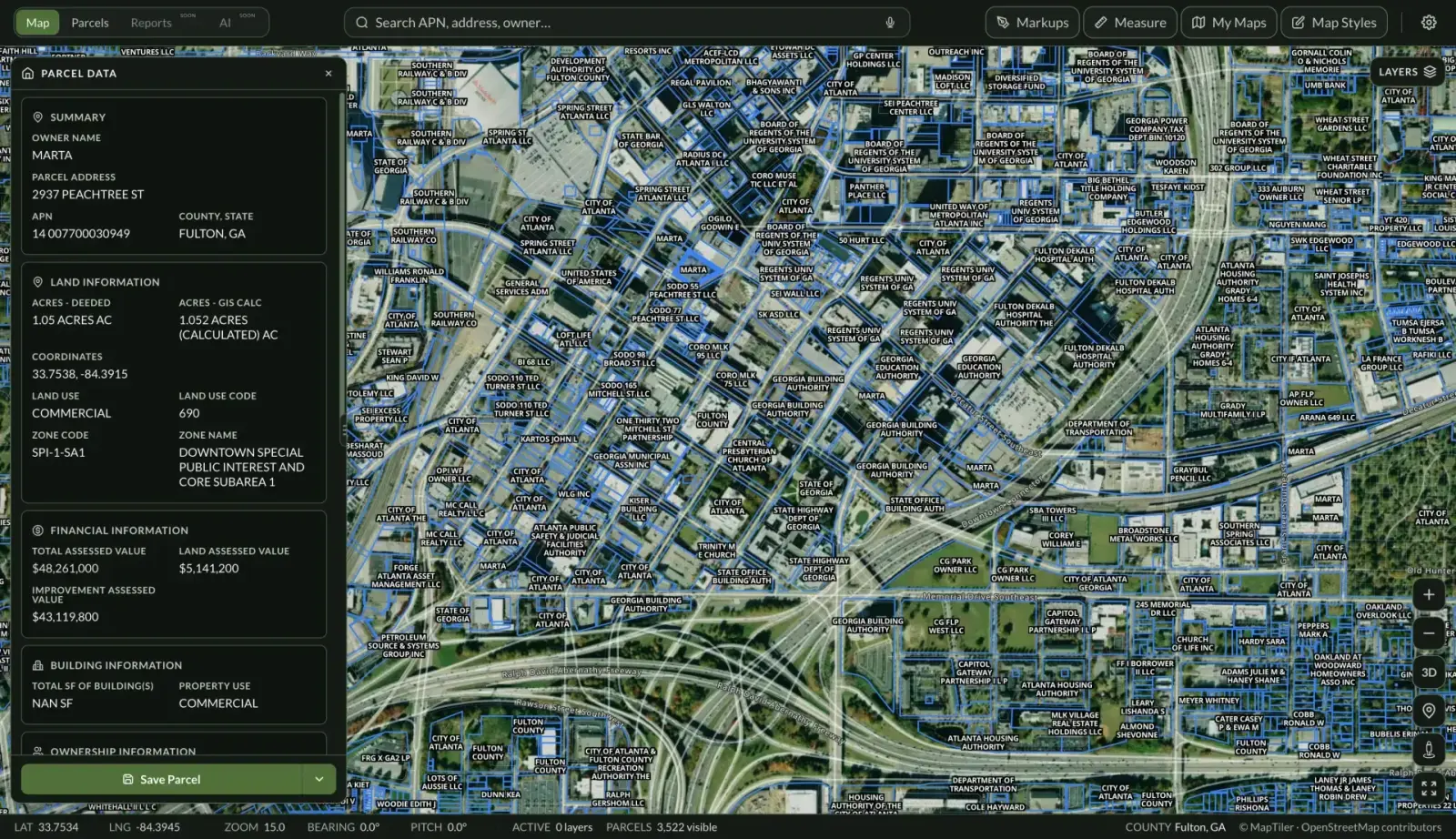
Land Owl overlays zoning, ownership, flood risk, and more on every parcel — before you commit a dollar.
How does the eminent domain process work?
In broad strokes: the condemning authority identifies the property needed, has it appraised, and makes a written offer; if the owner declines, the authority files a condemnation action and a court (or jury, in many states) determines just compensation. Many takings settle through negotiation before trial.
Procedures, notice requirements, and timelines vary significantly by state and by the type of condemning entity, so treat any specific description of the process as state-dependent.
What counts as just compensation?
The baseline is the property's fair market value at the time of the taking. In a partial taking, owners are generally also compensated for damages to the remainder — the loss in value to the land they keep, such as a parcel left with poor access or an awkward shape.
The government's initial offer is based on its own appraisal, and owners are entitled to contest it with their own. Independent appraisals routinely move the number, which is why experienced owners rarely accept the first offer without review.
Can you fight eminent domain?
You can challenge whether the taking is for a legitimate public use and whether proper procedures were followed, but courts interpret “public use” broadly, so stopping a taking outright is difficult. Most successful fights are about money — securing higher compensation — rather than preventing the taking.
What counts as public use, and how far it extends to private-party takings like pipelines or redevelopment, varies by state; several states tightened their rules after the Kelo decision in 2005. A condemnation attorney can assess the realistic options for a specific case.
What is inverse condemnation?
Inverse condemnation is when the government effectively takes or damages property without formally condemning it — for example, flooding land through a public works project or imposing regulation so restrictive the land loses essentially all economic use. The owner sues to force compensation, reversing the usual roles.
These claims are fact-intensive and legally demanding, and the standards vary by jurisdiction. If government action has destroyed your land's use or value, it is a question for a takings attorney, not a form.