
Why it matters when buying land
Without legal access, land can be nearly unusable and nearly unsellable. Most lenders will not finance a parcel without it, title insurers may except it from coverage, and counties commonly refuse building permits for lots that cannot demonstrate access.
The trap is that physical and legal access look identical on the ground. A dirt road that has served a parcel for decades may cross a neighbor's land by informal permission only — permission that can be revoked the day a new neighbor arrives.
Access problems are also where some of the best deals hide. Landlocked parcels sell at deep discounts, and a buyer who can secure a recorded easement afterward can capture the difference — but that is a deliberate, eyes-open strategy, not something to stumble into.
How to check it
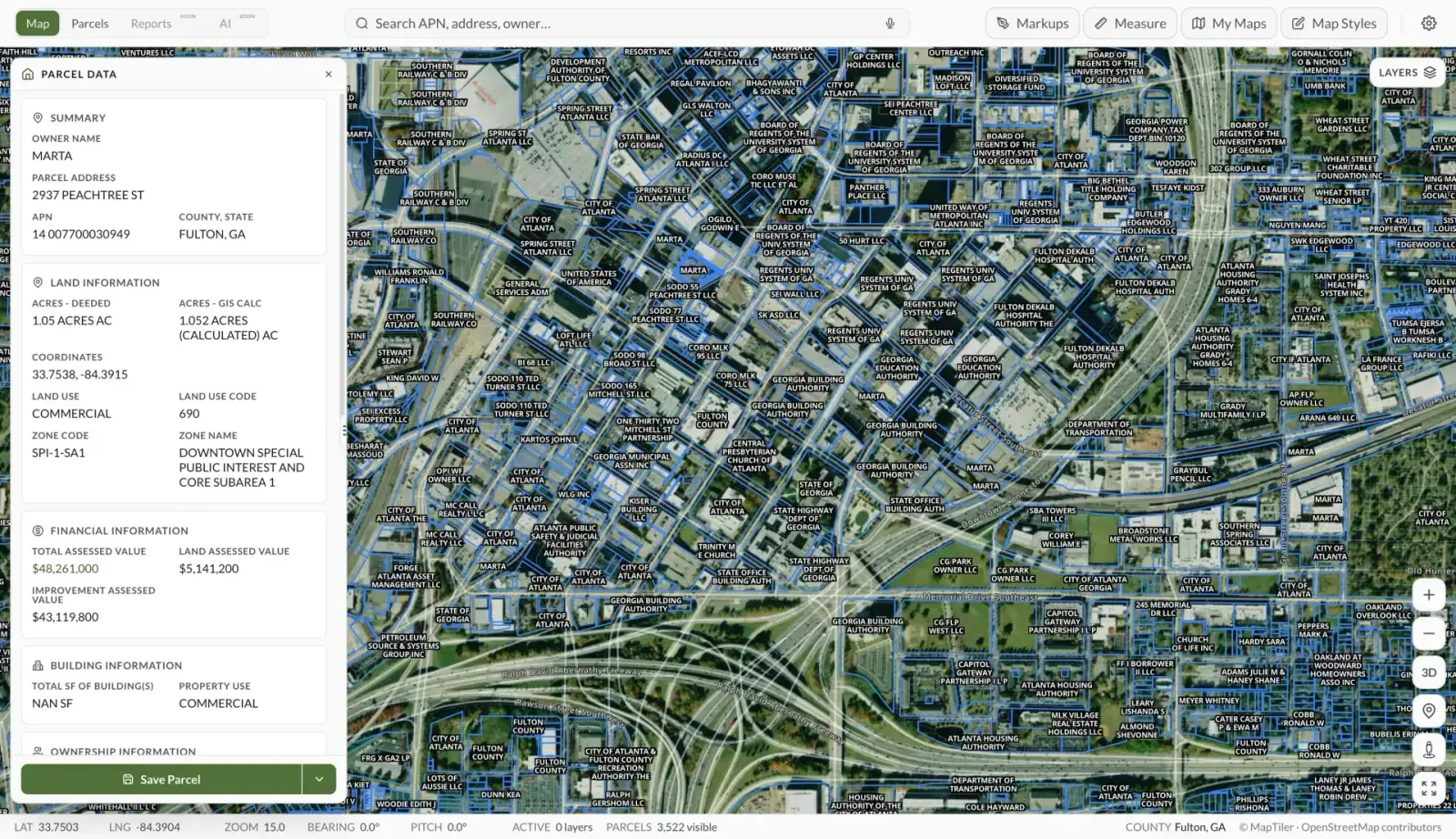
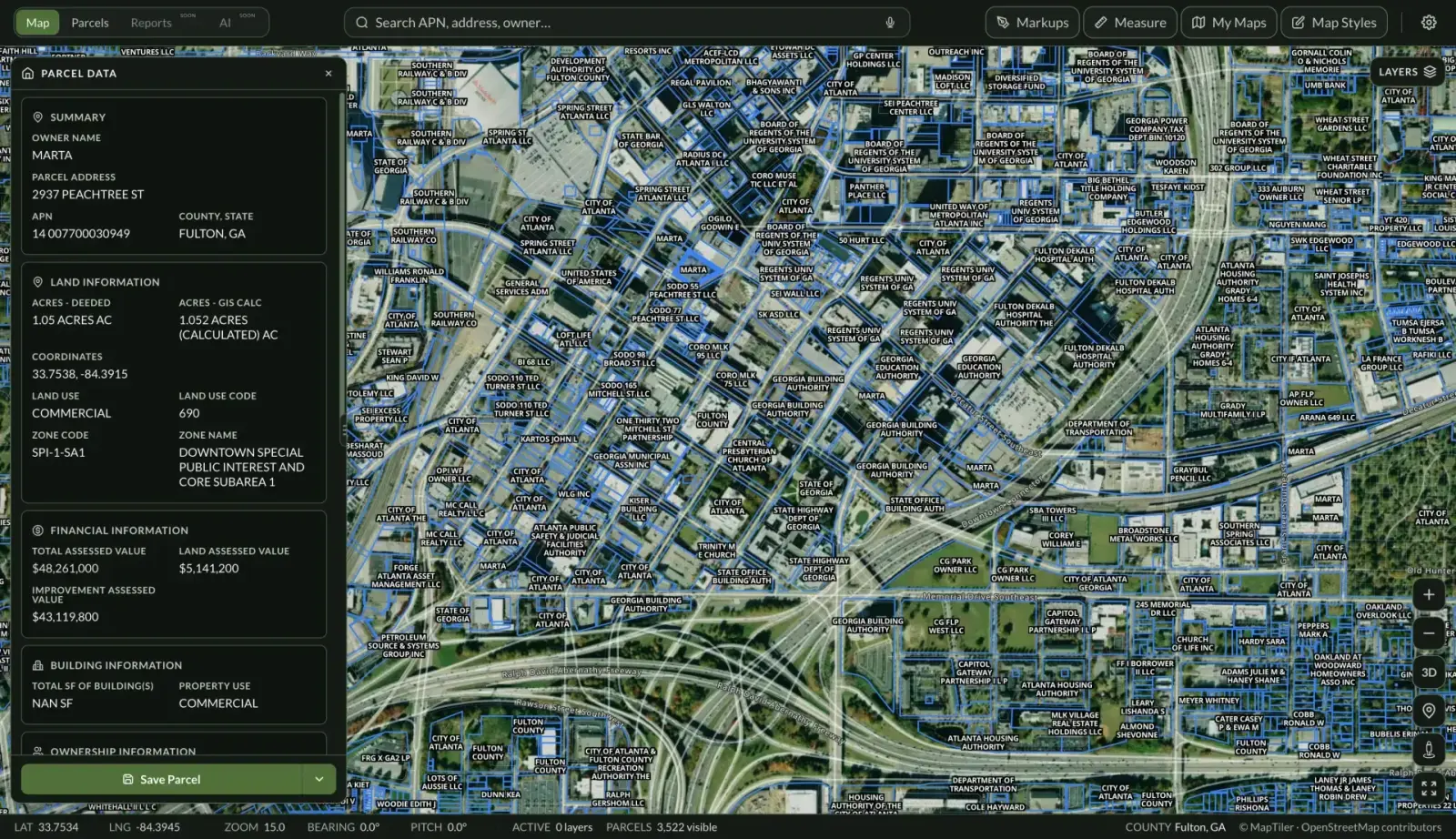
Start with the map: in Land Owl, the parcel boundaries on the map show whether the parcel touches a public road or whether other parcels stand between it and the nearest road — the first sign of a potential access problem.
Then verify the legal side. A title search or title commitment will show recorded access easements (or their absence), and the plat map may show platted roads or access strips. Ask the title company directly whether they will insure access — their answer is one of the most reliable signals available.
Confirm the road itself: not every road on a map is public. The county road department or recorder can tell you whether a road is publicly maintained, and a private road requires its own recorded rights and usually a maintenance agreement.
See it on a real parcel
Land Owl overlays zoning, ownership, flood risk, and more on every parcel — before you commit a dollar.
What is the difference between legal access and physical access?
Physical access means you can actually drive to the land; legal access means you have an enforceable right to do so. A parcel can have either without the other — a recorded easement over a swamp is legal access with no practical road, and a well-worn drive over a neighbor's field with no recorded easement is physical access with no legal right.
Buyers need both. The legal right protects you from being cut off; the physical route determines what building access actually costs.
What is insurable access?
Insurable access means a title insurance company is willing to insure that the parcel has a legal right of access — typically because it fronts a public road or benefits from a clearly recorded easement. It is a practical gold standard: the insurer has reviewed the record and is willing to stand behind it financially.
If a title company will only issue a policy with an access exception, treat that as a serious red flag and resolve it before closing, not after.
What if a property has no legal access?
The parcel is landlocked, and the fixes are mostly negotiated: buy a recorded easement from a neighbor, buy a strip of adjoining land that reaches the road, or look for an old easement in the chain of title that was never extinguished.
Some states recognize an “easement by necessity” when a landlocked parcel was split from a parcel that had access, but it requires court action and is never guaranteed — rules vary by state. Price a landlocked parcel as landlocked until access is actually recorded.
Does road frontage guarantee legal access?
Usually, but not always. Frontage on a publicly dedicated and maintained road is the cleanest form of access — yet a parcel can front a private road, an unopened “paper street” that was platted but never built, or a limited-access highway where driveway connections are prohibited.
Steep terrain or wetlands along the frontage can also make a legal connection physically impractical. Verify the road's status with the county and confirm a driveway permit is obtainable where you intend to connect.