
Why it matters when buying land
Access is one of the biggest drivers of land value. A landlocked parcel often sells at a steep discount compared to similar road-front land because you cannot legally drive to it.
Lenders are reluctant to finance landlocked land, and most counties will not issue building permits without proof of legal access. That can turn a cheap parcel into one you cannot build on, insure, or resell easily.
For experienced investors, landlocked parcels can also be an opportunity: securing an easement or buying a neighboring strip of land can unlock significant value.
How to check it
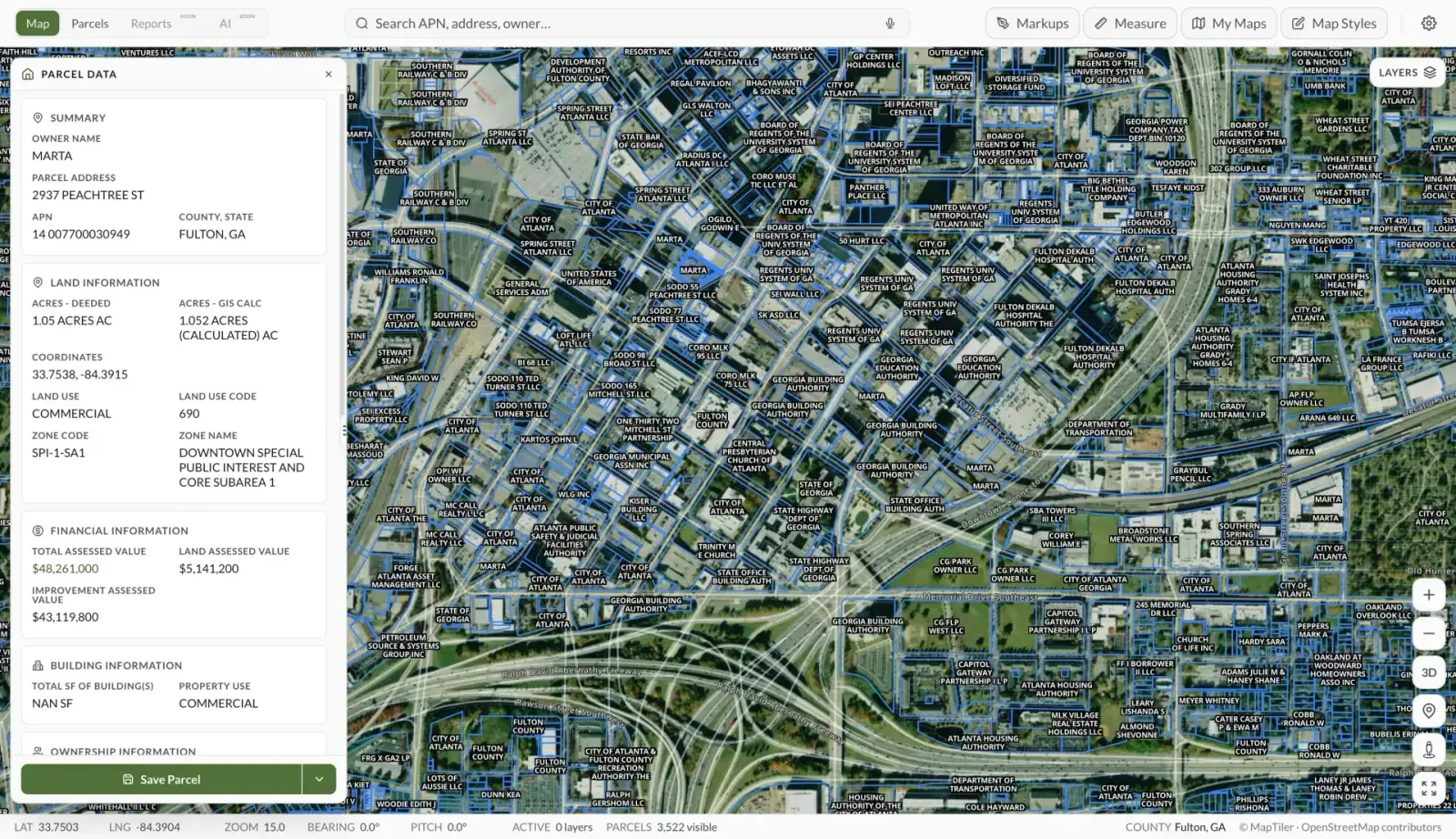
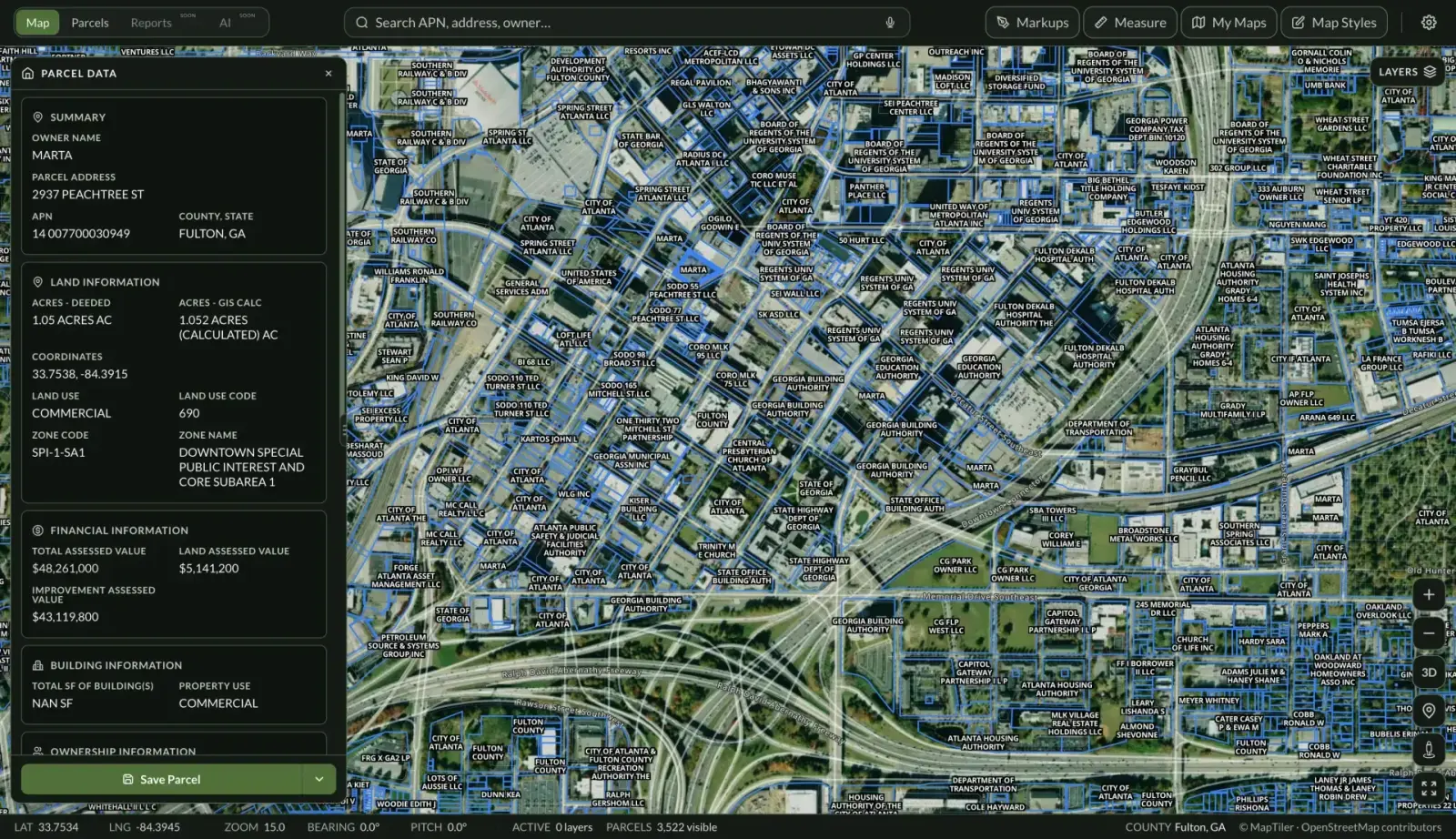
Look at the parcel boundaries on a map and confirm whether the parcel physically touches a publicly maintained road. In Land Owl, the parcel boundaries on the map make it easy to see whether a parcel fronts a road or sits behind neighboring land.
Physical adjacency is not the whole story — a parcel can touch a road and still lack legal access, for example across a limited-access highway. Order a title search to confirm whether a recorded access easement exists.
Use parcel ownership data to identify the neighbors you would need to cross, and ask the county road department whether the road serving the area is public or private.
See it on a real parcel
Land Owl overlays zoning, ownership, flood risk, and more on every parcel — before you commit a dollar.
Is a landlocked parcel worthless?
No — but it is usually worth substantially less than comparable land with road frontage, and it is harder to sell. The value depends on how realistic it is to obtain access: a parcel with a cooperative neighbor or an existing-use path is in a very different position from one surrounded by unwilling owners.
Some buyers deliberately target landlocked parcels at a discount, then negotiate an easement to capture the difference in value.
How do you get access to a landlocked parcel?
The cleanest route is a negotiated easement: you pay a neighboring owner for a recorded right to cross their land. Courts in many states can also grant an “easement by necessity” when a parcel became landlocked through a past split of commonly owned land, but the requirements vary by state and litigation is slow and expensive.
Other routes include buying a strip of land from a neighbor or, in some states, a statutory private-road process. Always get any access right in writing and recorded with the county.
Can you build on a landlocked parcel?
Usually not until access is resolved. Most counties require proof of legal access before issuing a building permit, and utility companies typically need an easement to run service lines to the property.
Even where a permit is technically possible, construction is impractical without a legal way to bring in equipment and materials.
Does a dirt road or trail count as legal access?
Not by itself. A path you can physically drive is not the same as a legal right to use it — that requires a recorded easement, a public right-of-way, or in some states a “prescriptive easement” earned through long, open use.
Whether historic use ripens into a legal right varies by state, so treat an unrecorded trail as no access until an attorney or title company confirms otherwise.