
Why it matters when buying land
If a rural parcel cannot pass the local requirements for a septic system, you may not be able to build a house on it at all. Septic feasibility is one of the single biggest factors separating a buildable rural lot from an expensive piece of scenery.
Feasibility comes down to soils, water table, slope, and space. Tight clay, shallow bedrock, high groundwater, and proximity to wells or water bodies can each disqualify a site or force a far more expensive engineered system.
Health departments also require minimum setbacks from wells, property lines, and surface water, plus a reserve area for a replacement drainfield — all of which consume buildable area on a small lot.
How to check it
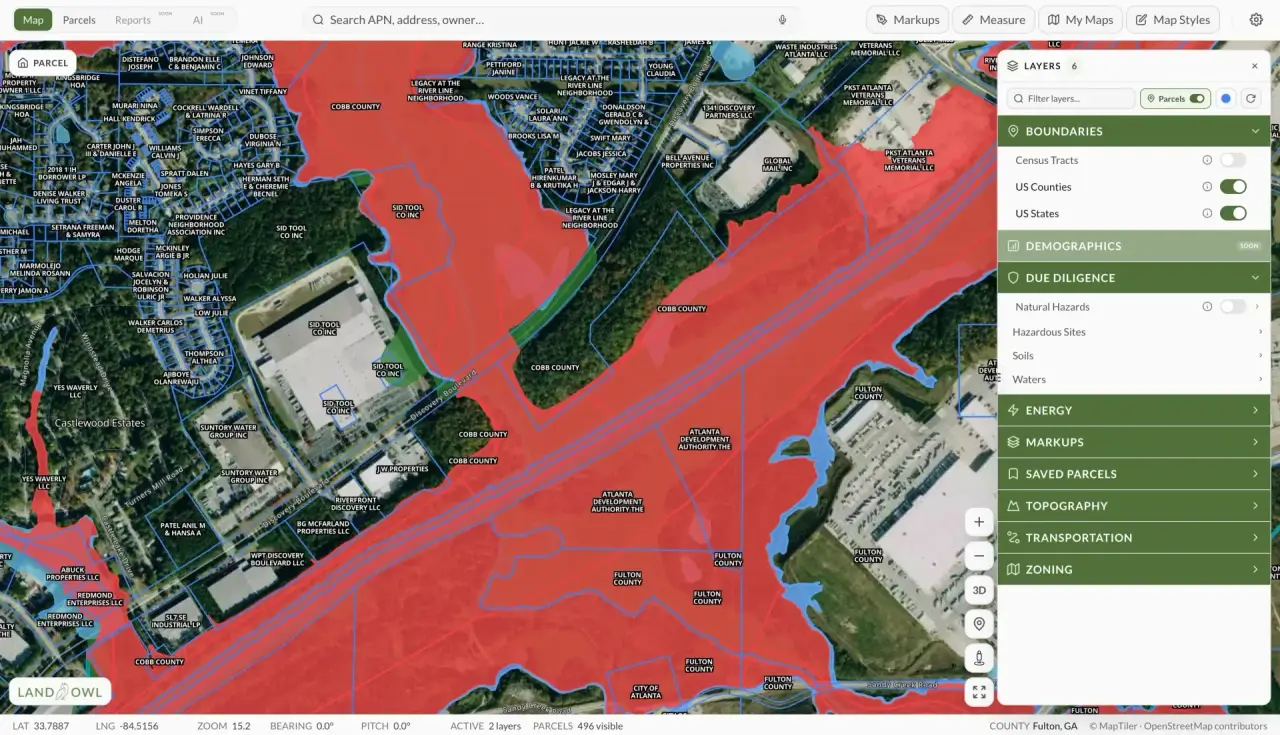
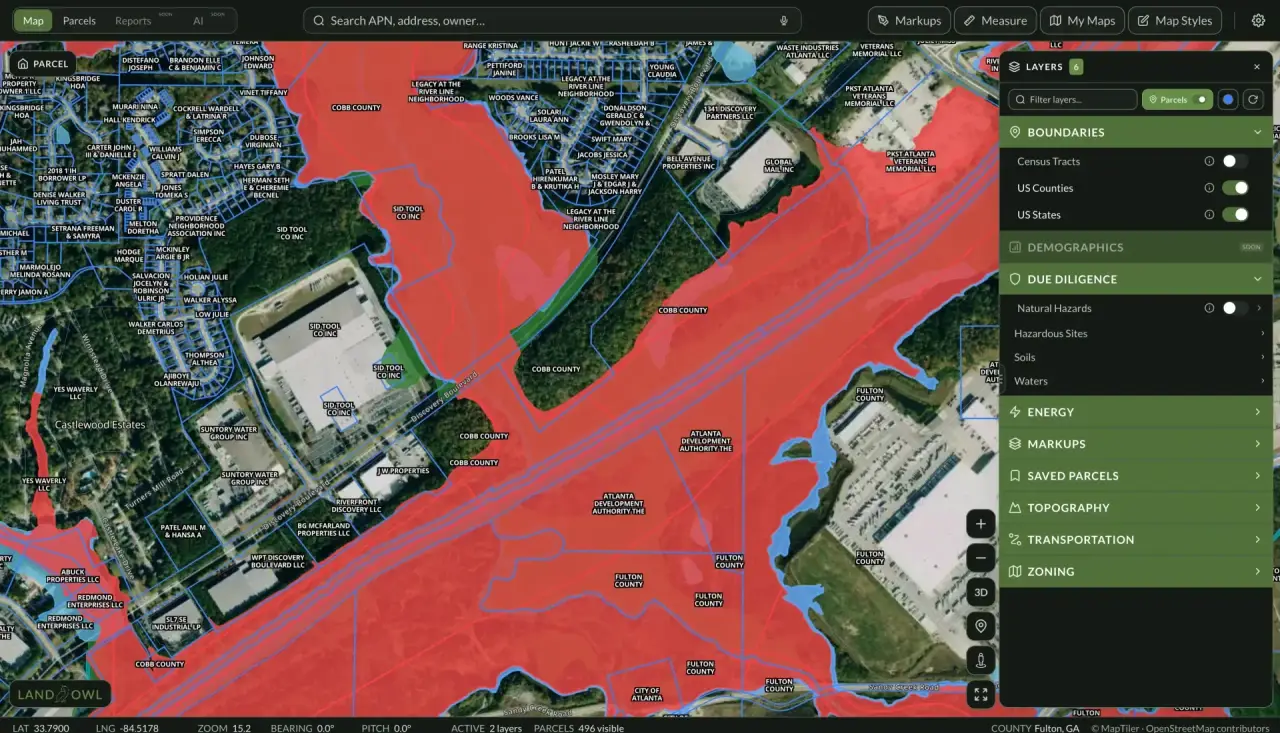
Start with the soil. In Land Owl, the soil survey layer shows the mapped soil types on the parcel, and NRCS soil data includes septic suitability ratings — a fast first read on whether a drainfield is plausible before you spend money on testing.
The definitive answer is a perc test (or soils evaluation) performed under the local health department's rules — many buyers make their purchase offer contingent on a passing test. Ask the county health department whether prior tests or permits exist for the parcel; results are often on file.
If the parcel already has a system, get it inspected and pumped before closing, and confirm the permit matches the home's bedroom count — replacement systems can cost as much as new ones.
See it on a real parcel
Land Owl overlays zoning, ownership, flood risk, and more on every parcel — before you commit a dollar.
How do I know if land will support a septic system?
The controlling test is the soil's ability to absorb and treat wastewater, measured by a perc test or a soil profile evaluation done to county health department standards. Good signs are deep, well-drained loamy soils; bad signs are heavy clay, hardpan, shallow bedrock, and seasonal high water tables.
Slope, lot size, floodplains, and required setbacks from wells and water bodies also factor in. Mapped soil data gives you a screening-level answer; only an on-site test gives you a permit.
How much does it cost to install a septic system on raw land?
A conventional gravity system commonly runs in the range of a few thousand to around fifteen thousand dollars installed, depending heavily on region, system size, and site conditions. Where soils are marginal, engineered or alternative systems — mounds, aerobic treatment units, drip dispersal — can run two to three times that or more.
Budget for the perc test, design, and permit fees on top of construction, and remember the cost difference between a conventional and an engineered system can swing the economics of the whole purchase.
What is the difference between a conventional and an alternative septic system?
A conventional system relies on the native soil: wastewater flows from the tank to a drainfield of buried trenches where soil does the treatment. It is the cheapest option but needs adequate soil depth and percolation.
Alternative systems compensate for poor sites — mound systems build a sand bed above grade, aerobic units pre-treat wastewater mechanically, and pressure or drip systems dose effluent in controlled amounts. They cost more to install, often require maintenance contracts, and are usually what a failed perc test pushes you toward.
How much land do you need for a septic system?
Many jurisdictions can fit a system on well under an acre of suitable soil, but minimum lot sizes for septic-plus-well lots are commonly in the half-acre to multi-acre range depending on local rules and soil quality. The drainfield, its required reserve area, and setbacks from the well, property lines, and any surface water all have to fit.
The worse the soil, the more area a drainfield needs — which is why a small lot with marginal soils can be unbuildable even though a larger one nearby with the same soils is fine.