
Why it matters when buying land
The price gap between buildable and unbuildable land is enormous, and nothing in a listing guarantees which one you are getting. Plenty of cheap rural lots are cheap precisely because they fail a perc test, sit in a wetland, or are too small for their zoning district.
A lot can fail on any single constraint. Perfect soil does not help if zoning requires 5 acres and the lot is 2; great zoning does not help if the only building site floods.
Sorting buildable from unbuildable quickly is the core skill of land buying — most of due diligence exists to answer this one question.
How to check it
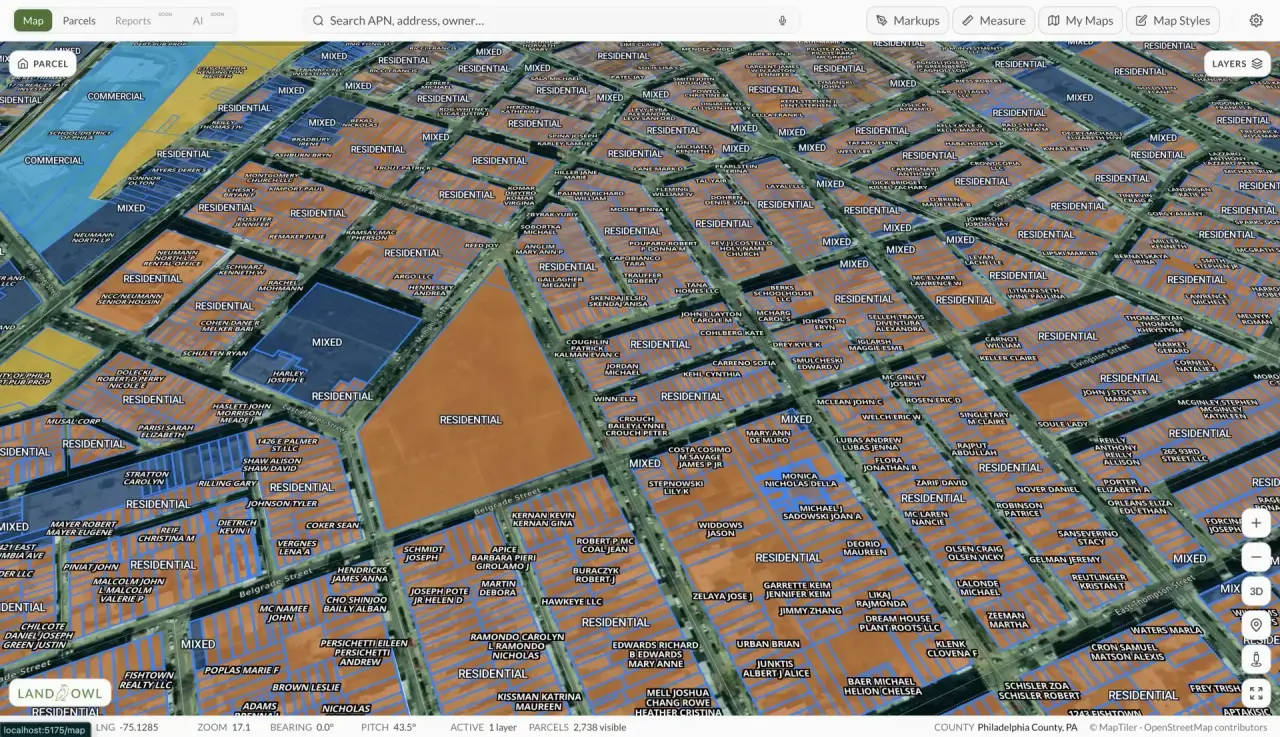
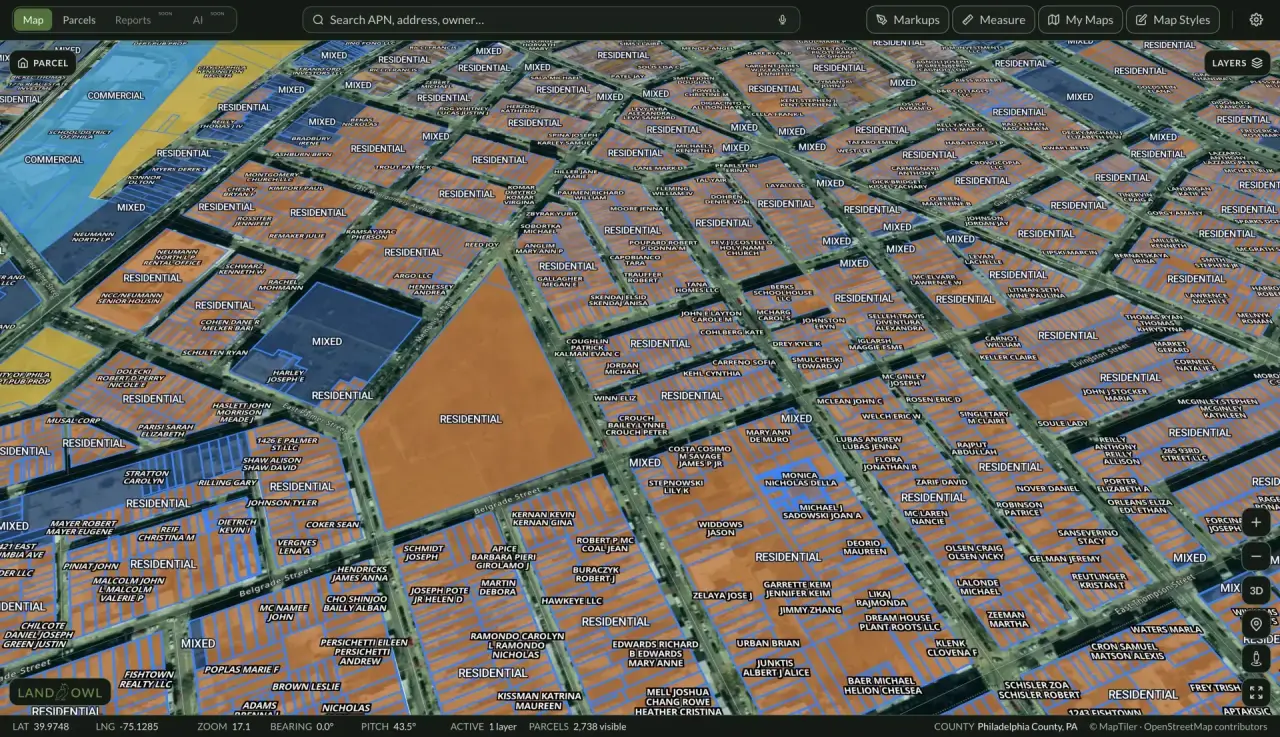
Screen the parcel against the major constraints before spending money. In Land Owl, the zoning layer shows the district and what uses it allows, the FEMA flood zone layer and wetlands overlay reveal flood and wetland coverage, and the soil survey layer indicates whether soils are likely to support a septic system. The parcel boundaries on the map let you judge whether enough clear ground remains once those constraints are drawn.
Then verify with the authorities: call the county planning and zoning office to confirm the lot is a legal lot of record, meets minimum lot size, and can be permitted for your intended use. Ask the health department about septic requirements and order a perc test if there is no sewer.
Finally, confirm legal access and utility availability — a recorded route to a public road, and realistic costs to bring in power and water. Make any purchase contract contingent on the checks that matter most.
See it on a real parcel
Land Owl overlays zoning, ownership, flood risk, and more on every parcel — before you commit a dollar.
What makes a lot unbuildable?
The most common killers are failed septic suitability (no sewer and soils that will not pass a perc test), lots smaller than the zoning district's minimum, no legal access, and ground dominated by wetlands or floodway. Setbacks can also render small or oddly shaped lots unbuildable by leaving no permissible building envelope.
Less obvious problems include unrecorded lot splits that never created a legal lot, deed restrictions prohibiting dwellings, and steep slopes or unstable soils that make construction uneconomical.
How do I know if a lot is buildable before buying?
Do a desktop screen first — zoning, flood zones, wetlands, soils, access, and lot size — to eliminate obvious failures cheaply. Then put the remaining questions to the county: planning staff will usually tell you whether a lot of record can be permitted, and the health department will explain septic requirements.
For the final answer, spend money in order of expense: a perc test and a survey before closing, under a due diligence contingency that lets you walk away if either fails.
Can an unbuildable lot become buildable?
Sometimes. A lot that fails minimum size might be combined with an adjacent parcel, a variance can occasionally relax a setback or dimensional rule, and engineered or alternative septic systems can overcome marginal soils in some jurisdictions — at a price.
Other defects are effectively permanent: land in a regulatory floodway or under a jurisdictional wetland is very hard to ever build on. Price an unbuildable lot on what it is, not on what a best-case approval might make it.
Does a buildable lot need utilities already in place?
No — most rural buildable lots have no utilities at the lot line, and that is normal. What matters is that utilities are realistically obtainable: power within a reasonable distance, a viable well or water connection, and soils or sewer for wastewater.
Get cost estimates before buying. Extending power a half mile or drilling through hundreds of feet of rock for water can add tens of thousands of dollars, which changes what the lot is worth even though it is technically buildable.