
Why it matters when buying land
If a parcel has no access to a municipal sewer, you will need a septic system to build a home — and a septic system needs soil that drains within an acceptable range. A failed perc test can make an otherwise perfect homesite unbuildable, or force a far more expensive engineered system.
Because perc results directly control buildability, they directly control value. Rural lots that have already passed a perc test routinely command a premium over untested neighbors.
Many land deals fall apart at the perc stage, which is why experienced buyers make the purchase contingent on a passing test.
How to check it
Start with the soil itself: review the soil survey layer in Land Owl to see the USDA soil types mapped across the parcel and their drainage characteristics. Heavy clay soils or a high water table are red flags before you ever pay for a test.
Call the county health or environmental department and ask whether a perc test or septic permit is already on file for the parcel — prior results are public record in most counties.
If no test exists, hire a licensed soil scientist or engineer to perform one, and write the purchase contract so closing is contingent on a passing result. Test methods, standards, and who may perform the test vary by county and state.
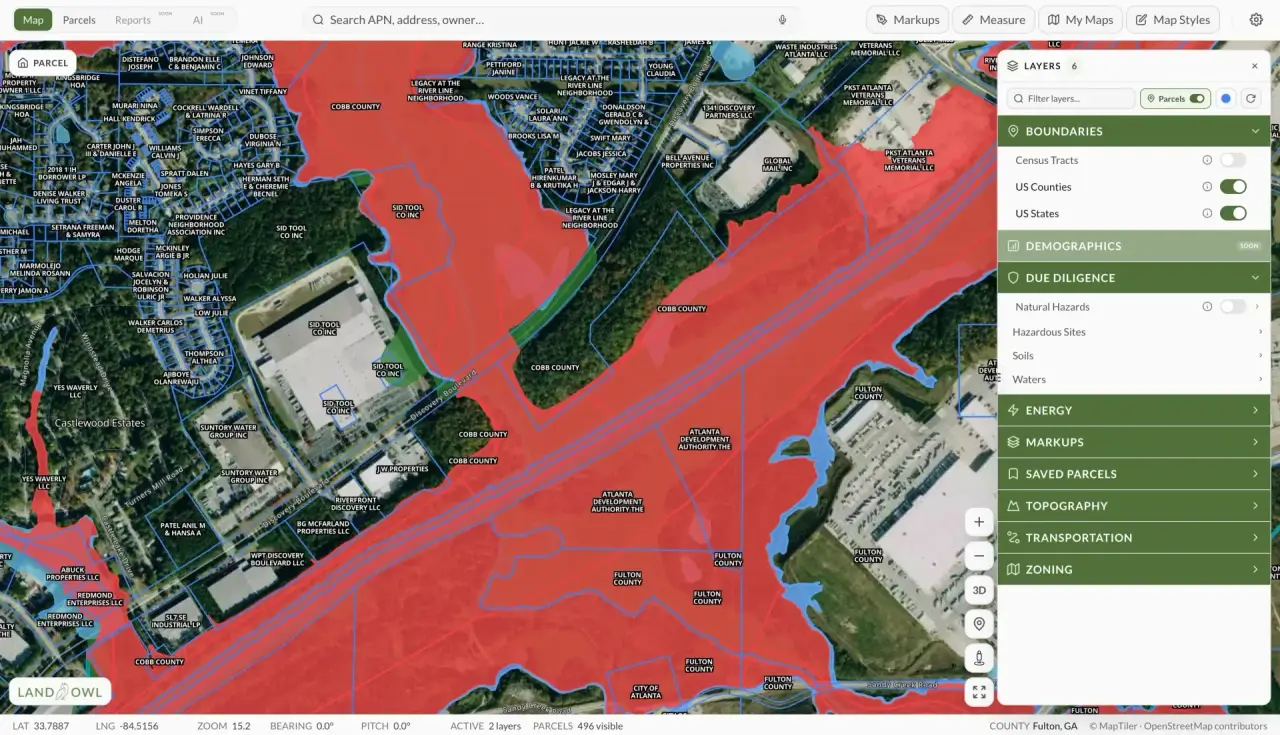
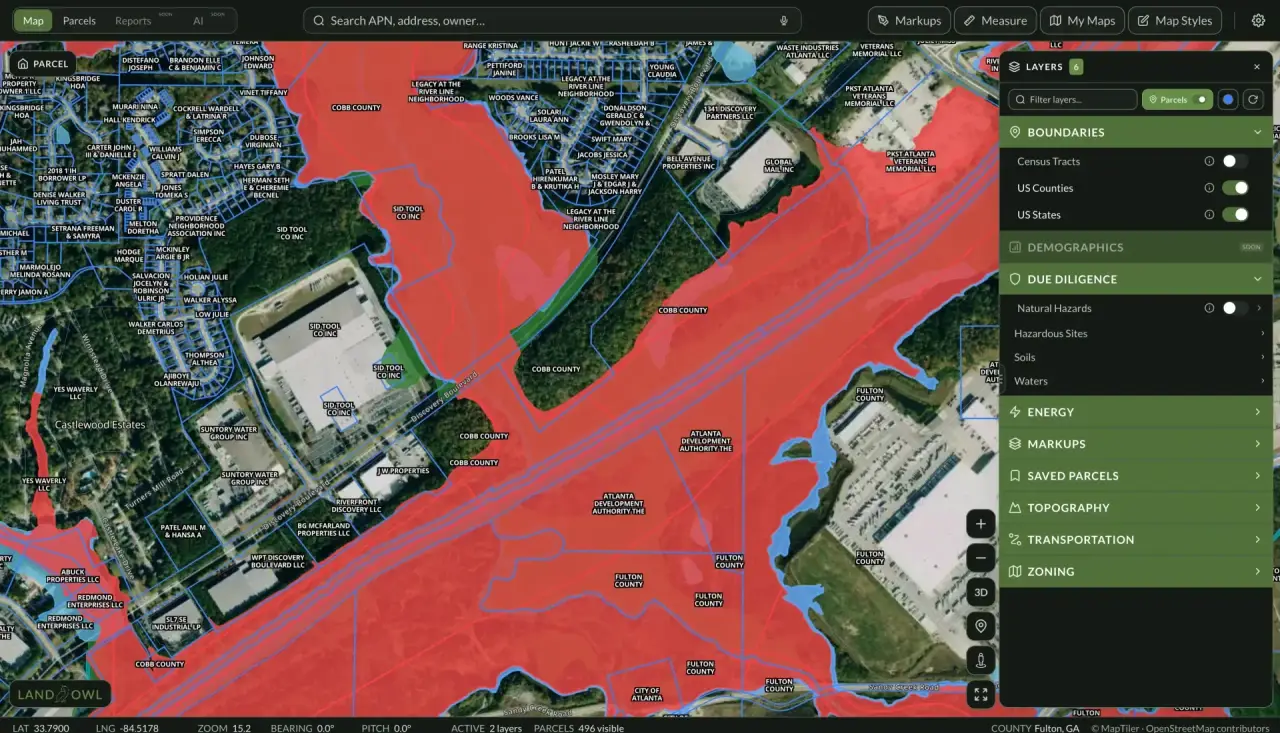
See it on a real parcel
Land Owl overlays zoning, ownership, flood risk, and more on every parcel — before you commit a dollar.
What happens if land fails a perc test?
A failed test does not always end the project. Options include testing a different spot on the parcel, installing an engineered or alternative septic system (mound, drip, or aerobic), or in some areas a holding tank — all at significantly higher cost.
If no workable option exists, the parcel cannot support a home and is effectively limited to uses that do not need a septic system, such as recreation, hunting, or timber.
How much does a perc test cost?
Most perc tests cost a few hundred dollars to around $1,500, depending on the region, site conditions, and whether the county requires a full soil evaluation by an engineer. That is small money compared to discovering after closing that the land cannot support a septic system.
How long is a perc test valid?
It varies by county — many honor results for two to five years, while some require retesting before each permit application. Conditions can also change: a rising water table or nearby development can affect drainage. Confirm validity rules with the local health department rather than relying on an old report.
Can you do a perc test before buying land?
Yes, and you should. Sellers commonly allow testing during a due-diligence period; the contract should grant site access and make the purchase contingent on a passing result. If a seller refuses to allow a perc test on unsewered land, treat that as a serious warning sign.