
Why it matters when buying land
Setbacks decide where on a parcel you can actually build. On a generous lot they are a footnote; on a narrow, odd-shaped, or small lot, stacking the front, side, and rear setbacks can shrink the buildable envelope to almost nothing.
They interact with everything else that consumes land — septic drainfields, wells, easements, steep slopes, wetlands. A lot can have plenty of acreage and still have no spot where a house legally fits.
Setback violations are expensive: a structure built over the line can block financing and resale, and in serious cases owners have been ordered to modify or remove buildings. Verifying setbacks before designing anything is basic land due diligence.
How to check it
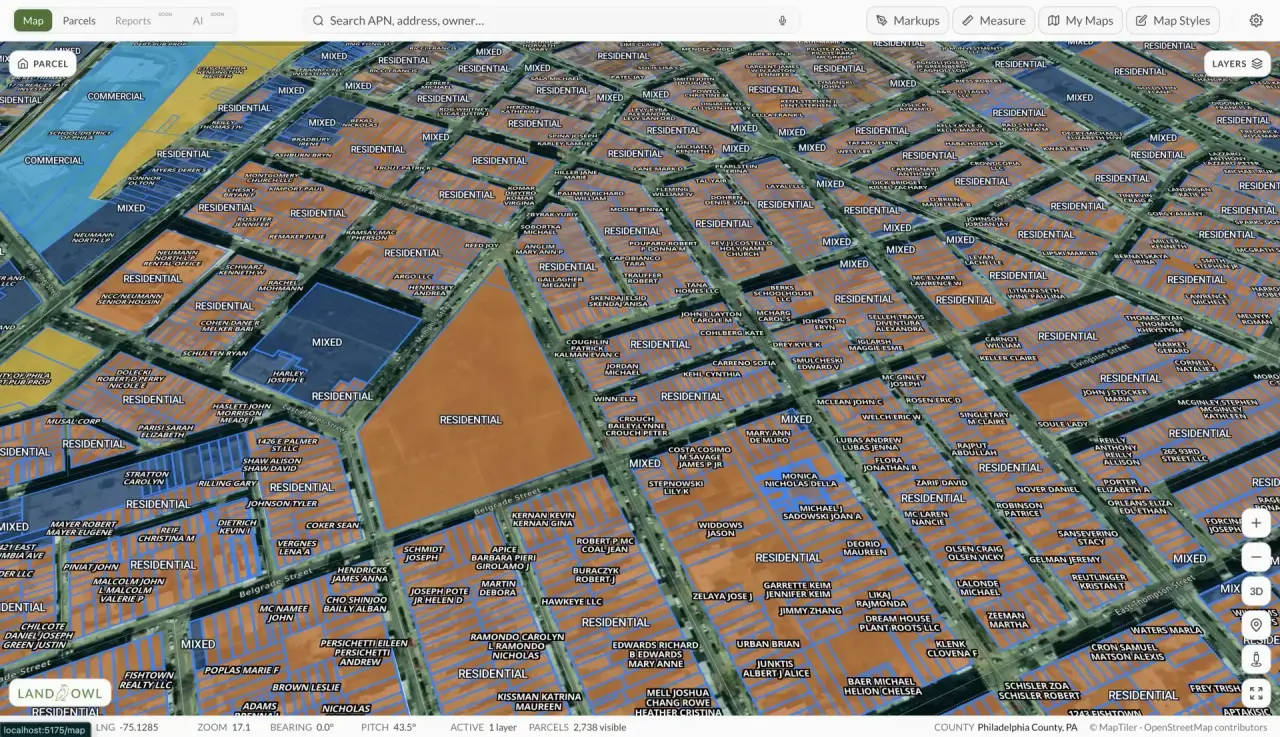
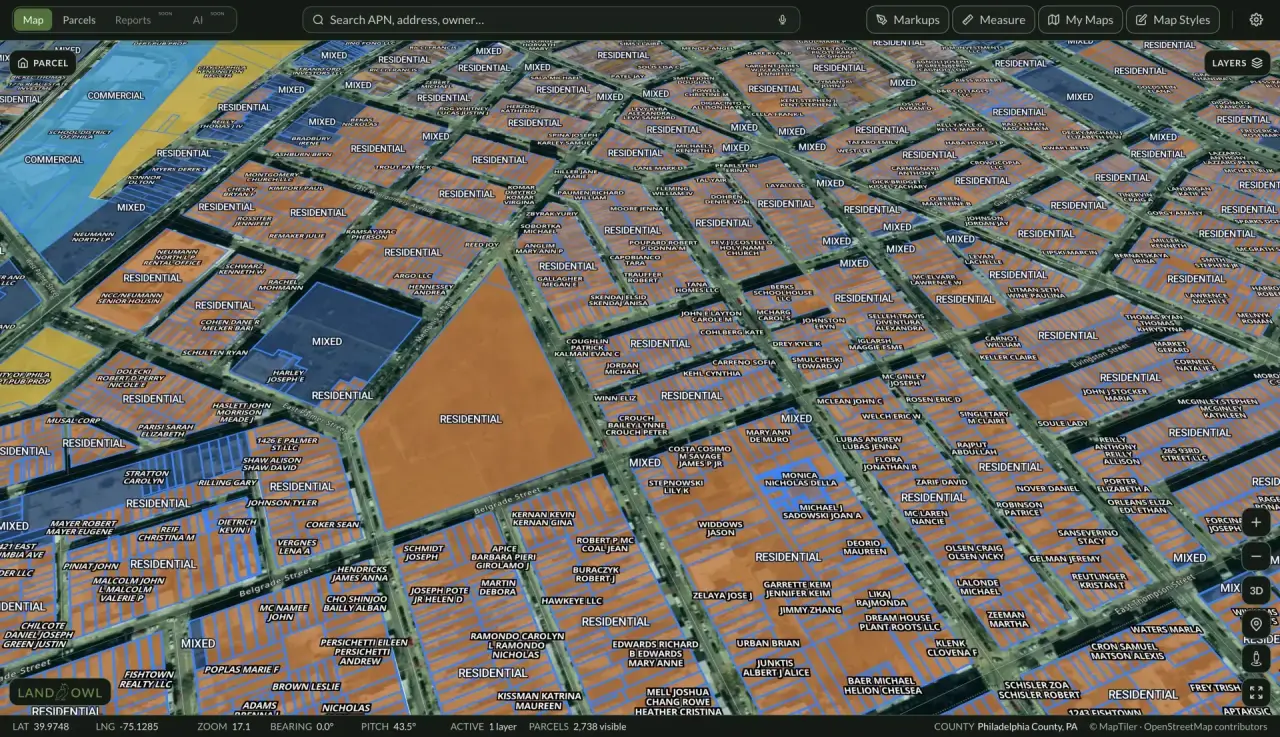
Find the parcel's zoning district, then read that district's setback table in the local zoning ordinance — setbacks are set by the city or county and vary district by district. In Land Owl, the zoning layer shows which zoning district a parcel falls in, which tells you which set of setback rules to look up.
Check for extra layers beyond base zoning: corner lots, waterfront buffers, road classifications, septic and well separation rules, and private CC&Rs can all impose stricter setbacks than the base district.
Before building, have a surveyor stake the property lines — setbacks are measured from the actual boundary, and fences or old assumptions about where the line runs are frequently wrong.
See it on a real parcel
Land Owl overlays zoning, ownership, flood risk, and more on every parcel — before you commit a dollar.
How far does a setback have to be from the property line?
There is no universal number — setbacks are set by local zoning and vary by district and structure type. Common suburban residential patterns are roughly 20 to 30 feet in front, 5 to 15 feet on the sides, and 10 to 25 feet in the rear, while rural and agricultural districts often require considerably more.
Front setbacks are also frequently measured from the road right-of-way line rather than the pavement, which pushes buildings further back than the road suggests. The zoning ordinance for the specific parcel is the only authoritative answer.
What happens if a building violates a setback?
The local government can deny permits, issue stop-work orders, levy fines, and in extreme cases require the encroaching portion to be removed. Violations also surface at sale time, when a survey or title work flags the encroachment and can derail financing.
For old, long-standing violations, remedies may include a variance after the fact or, in some areas, treatment as a legal nonconforming condition — but none of that is guaranteed, and rules vary by jurisdiction.
Can you get a variance from setback requirements?
Yes — a variance is the formal mechanism for relief when a setback creates a practical hardship, typically granted by a board of zoning appeals after a public hearing. Applicants usually must show the hardship stems from the lot's unique physical conditions, not self-created problems or mere preference.
Variances are discretionary and far from automatic, so never buy a lot that only works if a variance comes through unless you have priced in the risk of a denial.
Do setbacks apply to fences, driveways, and sheds?
Often differently than to houses. Many ordinances allow fences and driveways at or near the property line, while accessory structures like sheds and detached garages get reduced setbacks — but the specifics vary widely, and some features, like pools or large outbuildings, may face the full requirement.
Septic systems and wells have their own separation distances under health codes, which function like setbacks and can be stricter than zoning. Check each structure type against the local code rather than assuming one rule covers everything.