
Why it matters when buying land
A conservation easement fundamentally changes what a property is. Land under easement typically cannot be subdivided or developed beyond what the easement reserves, which usually means a steep discount to comparable unrestricted land — and a much narrower pool of future buyers.
Because the easement runs with the land, you inherit every restriction at closing. Buying 200 acres without realizing 180 of them are under a conservation easement is a costly mistake that a title search would have prevented.
For the right buyer, eased land is an opportunity: it can be excellent for hunting, grazing, timber (where permitted), or simply privacy, at a lower price per acre. For sellers and long-term owners, donating an easement can produce significant tax benefits.
How to check it
Order a title search — a recorded conservation easement will appear as an exception, with a reference to the full recorded document. Read the entire easement: each one is individually negotiated, and the details of reserved rights (home sites, structures, agriculture, timber) determine what the land is actually worth to you.
Ask the holder — the land trust or agency named in the document — about how they interpret and monitor the easement, and whether any amendments or violations are on record. Holders typically inspect eased properties annually.
Many conservation easements also appear in public datasets like the National Conservation Easement Database, which is useful for early screening, though it is not complete — the title record is the authority.
See it on a real parcel
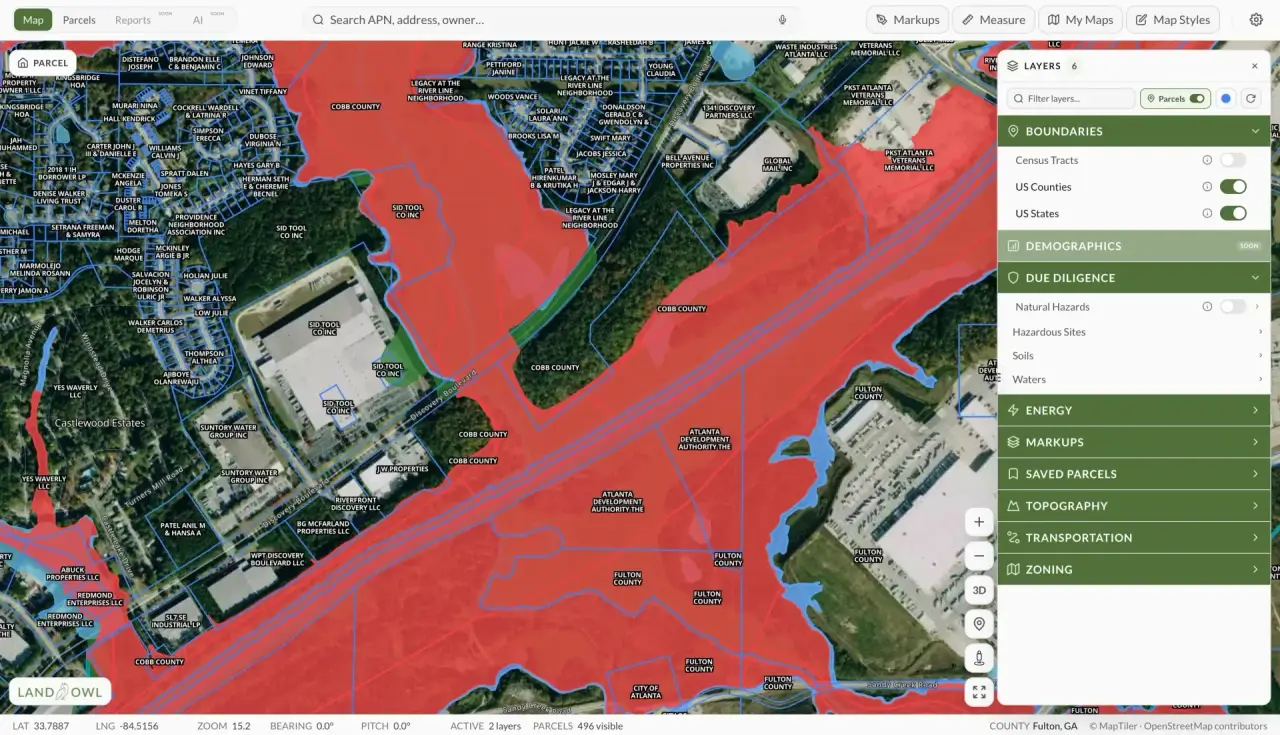
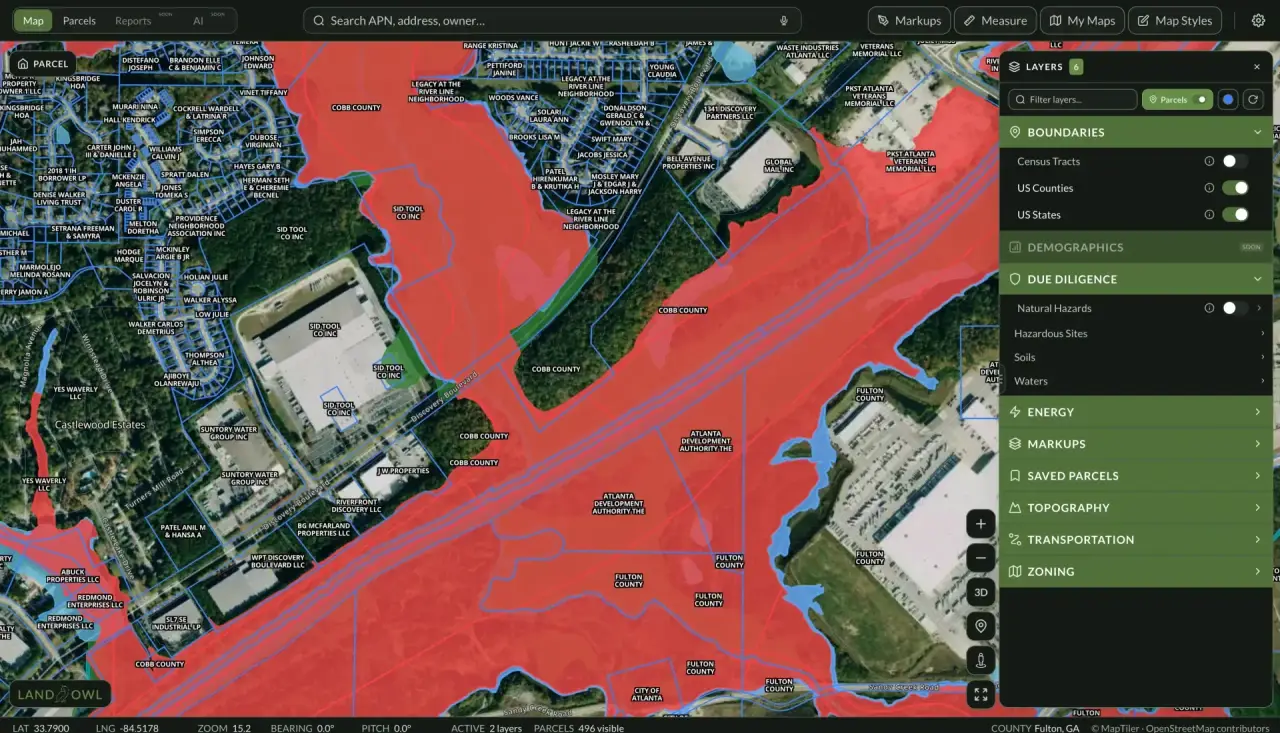
Land Owl overlays zoning, ownership, flood risk, and more on every parcel — before you commit a dollar.
Can you build on land with a conservation easement?
Only what the easement document expressly reserves. Many easements reserve one or more “building envelopes” where a home, barn, or outbuildings are allowed; others prohibit all new structures.
There is no standard answer — the recorded easement for that specific property controls, and the holder usually must approve plans within reserved envelopes. Never assume building rights exist until you have read the document.
Are conservation easements permanent?
Almost always, yes — perpetuity is usually a condition of the tax benefits that motivated the easement, and holders are legally obligated to enforce it forever. Amendments are possible but rare, generally limited to changes that strengthen or do not weaken the conservation purpose.
Extinguishing an easement typically requires a court proceeding showing the conservation purpose has become impossible, which is exceptional. Treat an easement as permanent when evaluating a purchase.
What are the tax benefits of donating a conservation easement?
A landowner who donates a qualifying perpetual easement to a qualified holder can generally claim a federal income tax deduction equal to the value the easement strips from the land, subject to annual limits with a multi-year carryforward. Eased land may also see lower property taxes and reduced estate tax exposure.
The rules are strict and the IRS scrutinizes easement valuations heavily, so competent appraisal, legal, and tax advice is essential. Specific benefits vary with your situation and state.
Does a conservation easement lower property value?
Yes, relative to the same land without restrictions — that reduction is precisely what the donor's tax deduction is based on. Discounts vary widely depending on how much development potential the easement removes and what rights are reserved.
For buyers, the discount is the trade: less flexibility and resale liquidity in exchange for a lower price on land whose character is permanently protected — including, often, the views and habitat around your reserved home site.