
Why it matters when buying land
Timberland is one of the few land types that produces income from the land itself — timber grows in volume and value every year regardless of markets, and harvests can fund the holding. That makes it a distinct asset class for investors as well as a lifestyle purchase for rural buyers.
The standing timber dramatically affects fair price. Two visually similar wooded tracts can differ in value by thousands of dollars per acre depending on species, age, and stocking — and a tract that was recently logged has had much of its near-term value removed.
Timberland also carries its own due-diligence list: legal access for log trucks, timber rights that may have been sold separately from the land, conservation easements restricting harvest, and preferential tax programs with penalties for changing the use.
How to check it
Hire a consulting forester to perform a timber cruise — a field inventory estimating volume, species mix, and value of the standing timber. For any tract where timber is a meaningful part of the price, this is the equivalent of a home inspection.
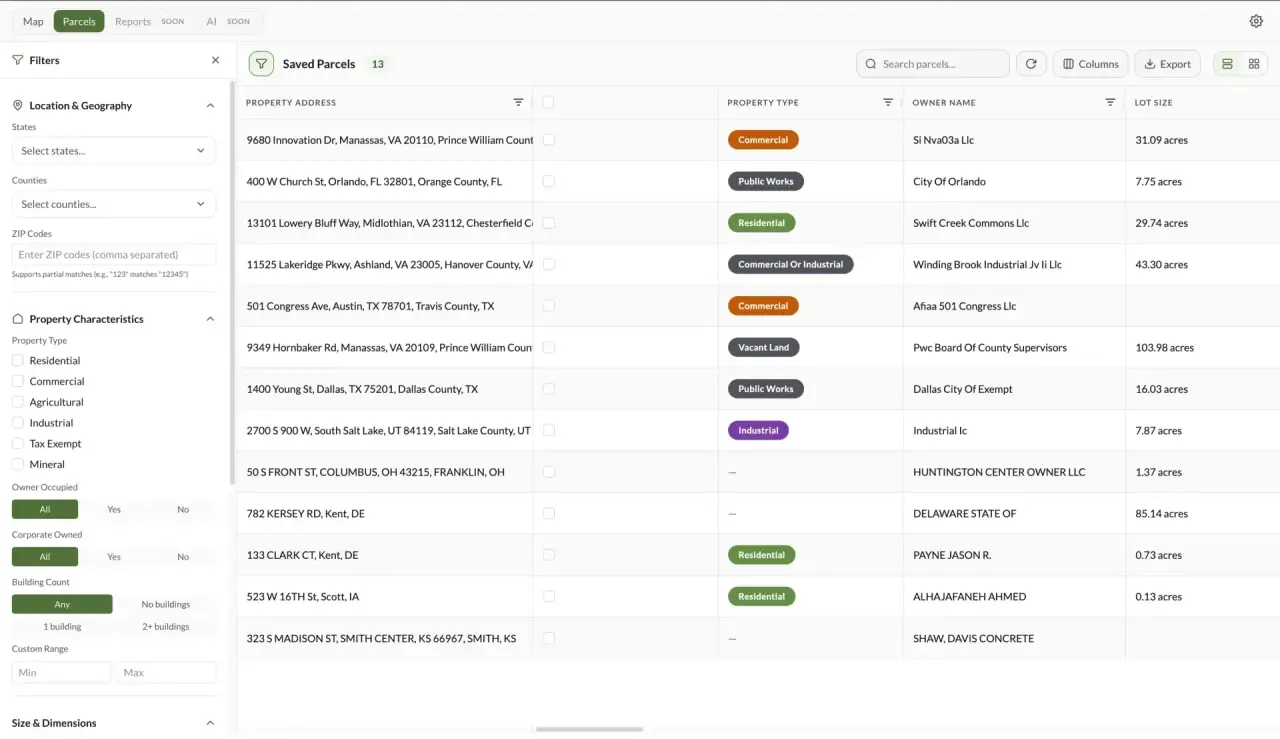
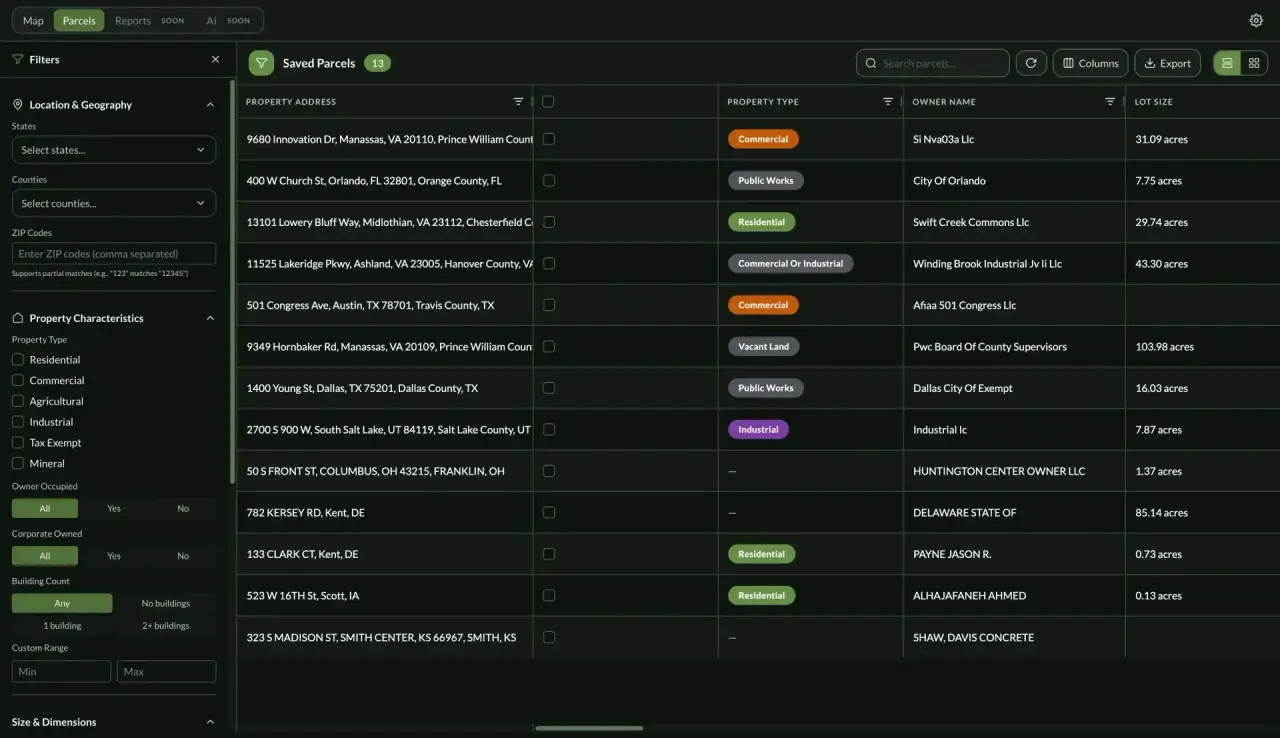
In Land Owl, the parcel boundaries on the map show the tract's shape, acreage, and road frontage — key inputs for harvest logistics — and the soil survey layer includes NRCS woodland productivity data indicating how well a site grows timber.
In the records, confirm via title search that timber rights have not been severed or sold under an outstanding timber deed, check for conservation easements, and ask the assessor whether the parcel is enrolled in a current-use or timber tax program and what withdrawal penalties apply.
See it on a real parcel
Land Owl overlays zoning, ownership, flood risk, and more on every parcel — before you commit a dollar.
Is timberland a good investment?
It has historically been a steady, low-correlation asset: returns come from biological growth, timber price appreciation, and land value, and institutional investors hold it through TIMOs and REITs for exactly those reasons. Returns are modest and long-horizon rather than spectacular.
For individual buyers the economics depend heavily on scale, access to mills, and management quality. Small tracts often make more sense valued as recreation or future homesite land with timber as a bonus, not as pure investment timber.
How is timberland valued?
Appraisers typically value the bare land and the standing timber separately and add them. The timber side comes from a cruise — volume by species and product class (sawtimber, pulpwood) multiplied by current stumpage prices — while bare land value reflects soil productivity, location, and access.
Pre-merchantable young stands carry value too, based on their cost to establish and discounted future harvest. This is why a recent timber cruise, not the county assessment, is the basis for negotiating a timberland purchase.
What is a timber cruise?
A timber cruise is a statistical field inventory of a forest: a forester measures sample plots across the tract and projects total volume, species composition, size classes, and quality, then applies market stumpage prices to estimate value. Cruises also note access, terrain, and stand health.
Intensity varies from a quick walkthrough estimate to a high-sample-rate cruise suitable for closing a sale. For a buyer, even a basic cruise protects against overpaying for a tract whose merchantable timber was overstated — or recently cut.
What are timberland property tax programs?
Most states offer preferential property tax treatment for land managed as forest — current-use, timberland classification, or yield-tax programs that assess the land at its forestry value rather than market value, often cutting the annual tax bill substantially. Many require a written management plan and minimum acreage.
The catch is the exit: converting enrolled land to another use, or sometimes simply selling it, can trigger rollback taxes covering several years of the foregone difference. Always ask whether a tract is enrolled and who bears the rollback before closing — program details vary widely by state.