Why it matters when buying land
Land sales are overwhelmingly as-is, and vacant land has no inspection report or disclosure regime comparable to houses in most states. What you fail to discover before closing becomes your problem after it.
The most expensive land mistakes — buying a lot that cannot pass a perc test, a parcel with no legal access, or acreage that is mostly wetland — are all preventable with routine diligence that costs a tiny fraction of the purchase price.
Diligence also drives negotiation. Findings like an encroaching fence or an unexpected easement are leverage for a price reduction or seller fixes, but only while a contingency still lets you walk.
How to check it
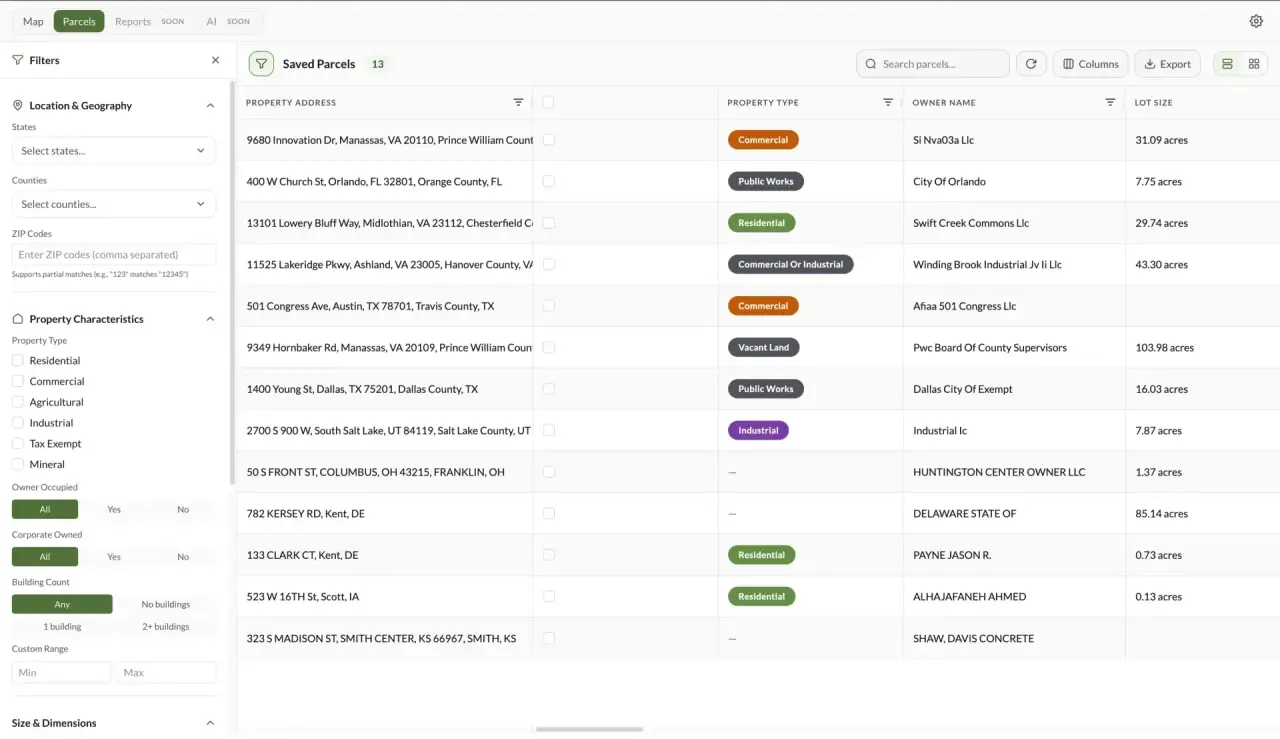
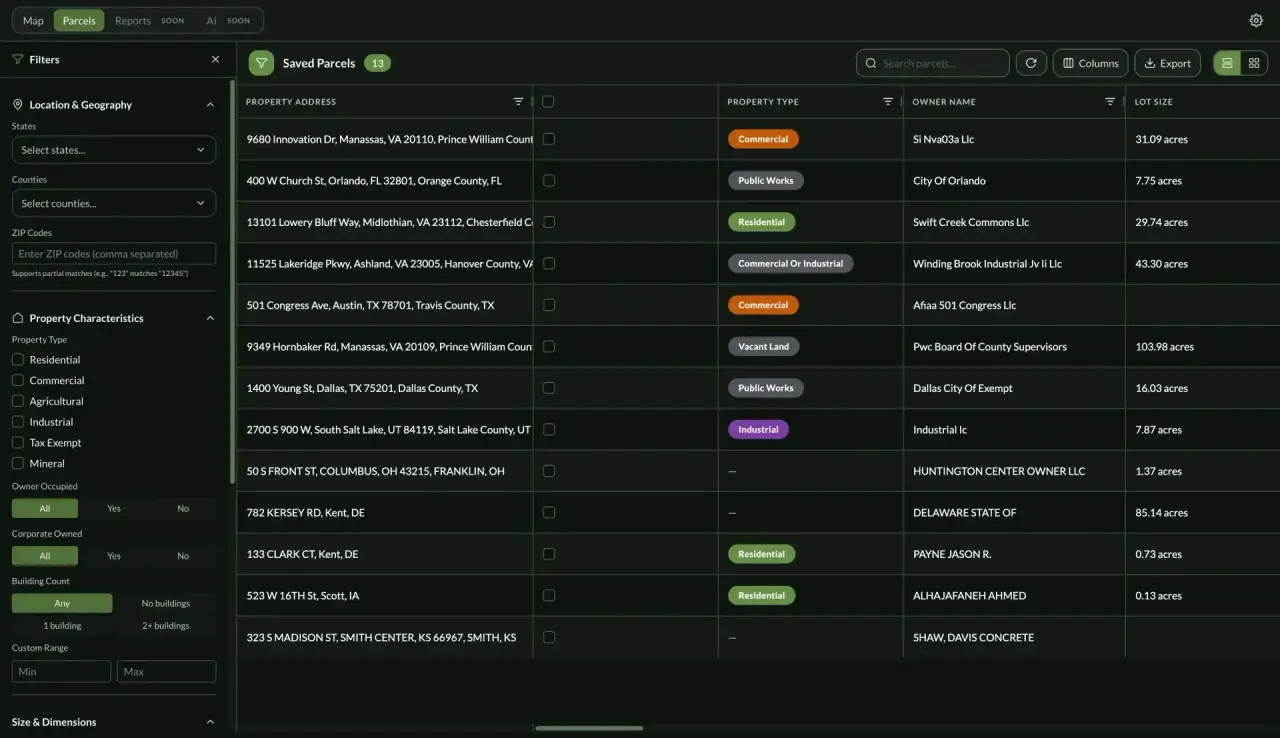
Start with a desktop screen before you ever write an offer. In Land Owl, the zoning layer, FEMA flood zone layer, wetlands overlay, and soil survey layer let you screen a parcel against the most common deal-killers in minutes, while the parcel boundaries on the map and parcel ownership data confirm what you are actually looking at and who owns it.
Under contract, spend money in order of importance: a title search or title commitment (title, easements, restrictions, access), then a perc test if the land needs septic, then a boundary survey. Call the county planning office to confirm zoning and permitting for your intended use, and the utilities to price power and water.
Walk the land yourself — maps miss dumped trash, wet spots, encroachments, and neighbors' uses. Keep every contingency deadline on a calendar; missing one can forfeit your right to back out.
See it on a real parcel
Land Owl overlays zoning, ownership, flood risk, and more on every parcel — before you commit a dollar.
What should a land due diligence checklist include?
Core items: title search (ownership, liens, easements, deed restrictions), legal access to a public road, zoning and permitted uses, minimum lot size and setbacks, flood zone and wetland status, soil suitability and a perc test if septic is needed, utility availability and cost, property taxes and any back taxes, and a boundary survey.
Situational items: mineral and water rights, timber value, environmental contamination history, HOA covenants, conservation easements, and pending road or eminent domain projects. Tailor the list to the land and your intended use.
How long is a typical due diligence period for land?
Commonly 30 to 90 days for rural land, negotiated in the purchase contract — longer when approvals like rezoning, perc tests in busy seasons, or subdivision feasibility are involved. Cash deals on simple parcels sometimes run shorter.
Negotiate the period around your slowest necessary task. If the health department is backed up six weeks on perc tests, a 30-day window is a trap.
How much does land due diligence cost?
The desktop screen is essentially free. Typical paid items: a title search or commitment from a few hundred dollars, a perc test commonly several hundred to a couple thousand depending on the county, and a boundary survey from roughly a thousand dollars to several thousand for large or complicated parcels. Costs vary widely by region and parcel.
It adds up — which is why the free screening matters. Eliminating bad parcels early means you only spend real money on land that has already survived the obvious tests.
Can you back out of a land purchase during due diligence?
If your contract includes a due diligence or inspection contingency, generally yes — you can terminate within the period and recover your earnest money, usually without having to justify the decision. That is the entire point of the contingency.
The details depend on the contract's exact wording and deadlines, and contract law varies by state. Never sign a land contract without a diligence contingency unless you have already completed your investigation.