
Why it matters when buying land
Entitlement is often the single biggest risk and value driver in a land deal. Raw land that gets entitled for development can multiply in value, while a denied rezoning or a failed approval can leave a buyer holding land that cannot support the project they planned.
The process is slow and uncertain — depending on the jurisdiction and the complexity of the project, entitlement can take anywhere from a few months to several years, with public hearings, studies, and revisions along the way.
It also explains pricing. “Entitled” lots command a premium precisely because someone else already absorbed the time, cost, and approval risk; unentitled land is cheaper because that risk still sits with the buyer.
How to check it
Call the local planning or community development department and ask what approvals the parcel currently holds and what your intended use would require. Many counties and cities publish active applications, hearing schedules, and past approvals online.
Pull the parcel's zoning and any recorded development agreements, conditions of approval, or plat notes — entitlements often come with conditions that bind future owners. A title search will surface recorded development agreements and restrictions.
If the seller claims the land is “entitled,” ask for the actual approval documents and check whether they have expired. Many approvals lapse if not acted on within a set window, and renewal rules vary by jurisdiction.
See it on a real parcel
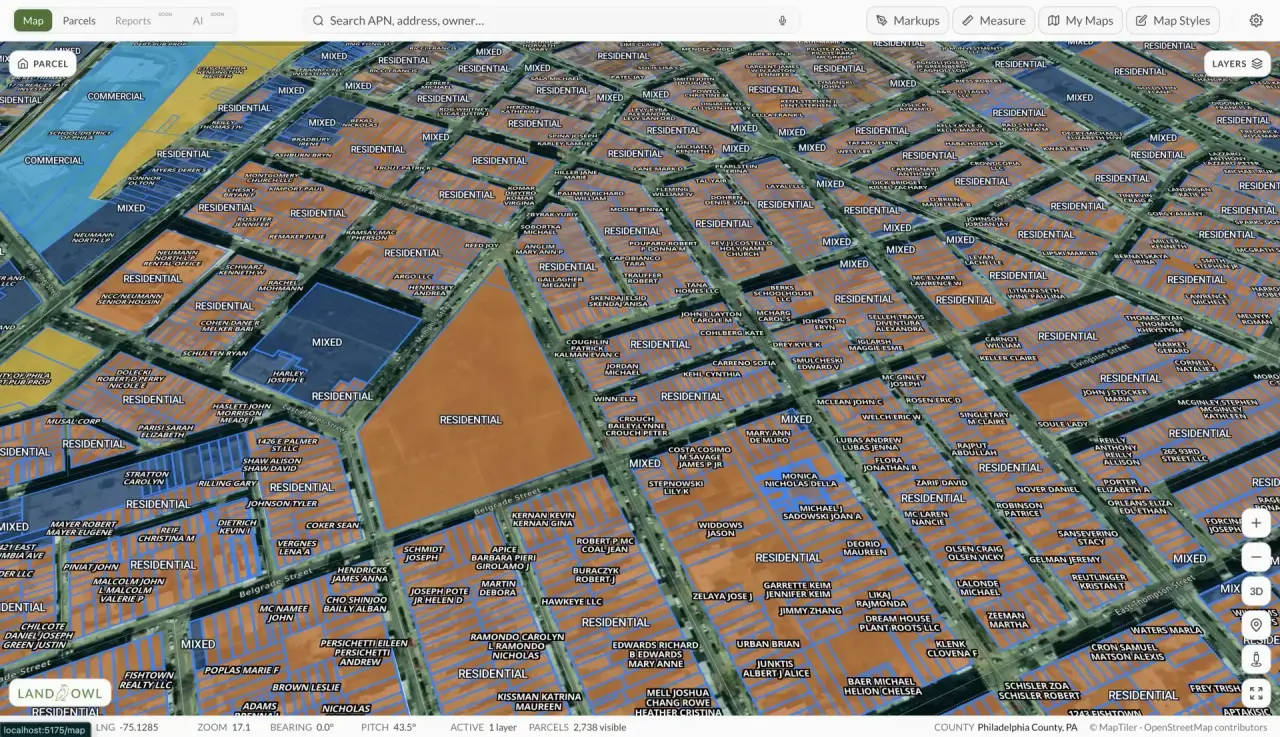
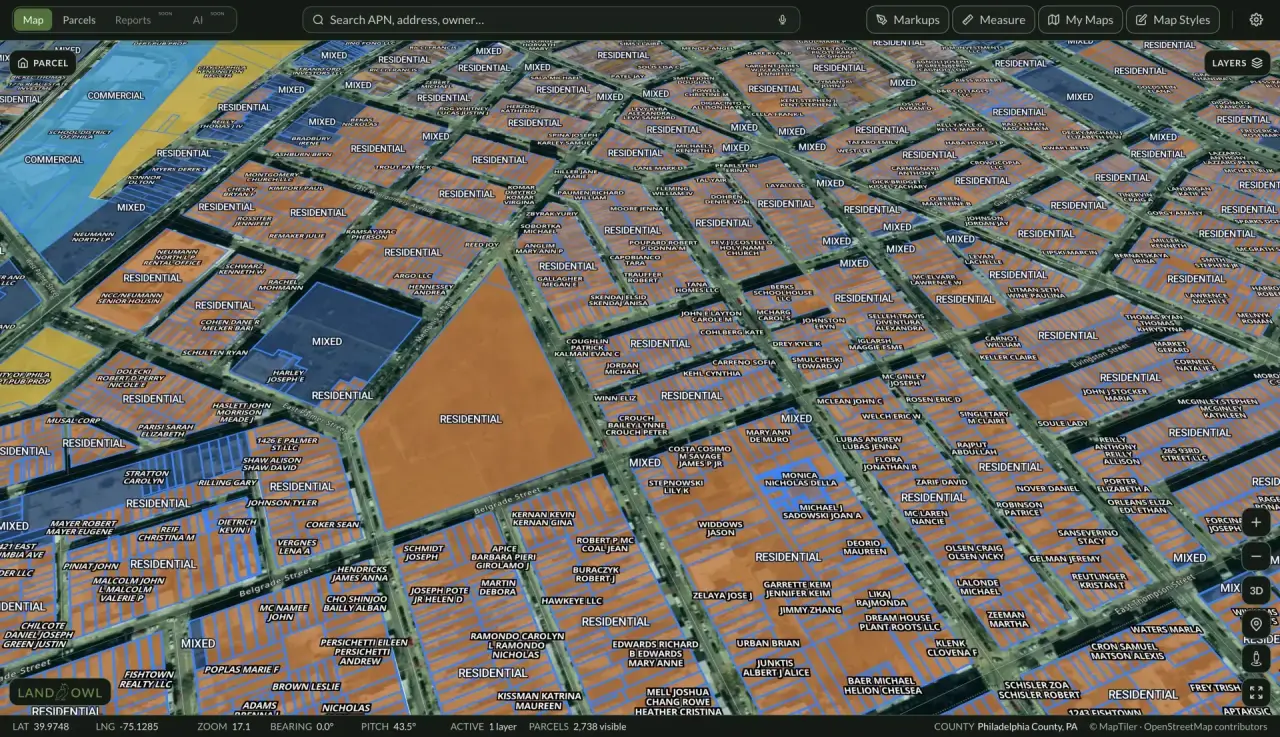
Land Owl overlays zoning, ownership, flood risk, and more on every parcel — before you commit a dollar.
What approvals are part of the entitlement process?
The mix depends on the project and the jurisdiction, but common entitlements include rezonings or zoning map amendments, conditional use permits, variances, site plan or design review approvals, subdivision or plat approvals, and environmental clearances.
Utility commitments — confirmed sewer, water, and road capacity — are often handled alongside entitlements, since a project cannot proceed without them. Building permits come last, after the land-use approvals are in place.
How long does entitlement take?
Anywhere from a couple of months for a simple administrative approval to several years for a large rezoning or master-planned project. Timelines vary enormously by state, county, and even by the political climate of a particular city council.
Public hearings, neighbor opposition, traffic and environmental studies, and requested revisions are the usual sources of delay. Experienced developers budget generous time and contingency for the entitlement phase.
What does “fully entitled land” mean?
Fully entitled land has every discretionary approval needed to build a specific project — typically zoning, site plan, and subdivision approvals — leaving only ministerial steps like building permits. It is the lowest-risk, highest-priced form of development land.
Be careful with the phrase in listings: sellers sometimes call land “entitled” when only some approvals exist or when approvals have expired. Verify the documents rather than the description.
Do entitlements transfer when land is sold?
Generally yes — most entitlements attach to the land rather than the owner, so a buyer inherits approvals along with any conditions attached to them. Recorded development agreements and conditions of approval bind successors.
There are exceptions: some permits are issued to a specific applicant, and some approvals expire if the project does not proceed on schedule. Confirm transferability and expiration dates with the issuing agency before paying an entitled-land premium.