
Why it matters when buying land
Lot line adjustments solve real problems cheaply: a garage that turns out to straddle the boundary, a driveway on the wrong side of the line, a building site that needs a few more feet to meet setbacks, or two owners who simply want a fence line to become the legal line.
For buyers and investors, they are also a value tool. Shifting acreage between commonly owned parcels can turn one marginal lot and one oversized lot into two clean, sellable parcels — without the cost and time of a subdivision.
The risk is doing it informally. Swapping land by handshake or by quitclaim deed without going through the official process can create unbuildable, unfinanceable “illegal lots” that fail title review years later.
How to check it
If you are considering a parcel whose boundaries look recently changed — or a deal that depends on moving a line — start with the county planning or community development department. They administer the process, and they can tell you whether a past adjustment was properly approved and recorded.
Review the recorded documents: a legitimate adjustment leaves a paper trail of approval (often a certificate of compliance or recorded adjustment map) plus new deeds with new legal descriptions. A title search will surface them.
For a planned adjustment, expect to hire a licensed surveyor to prepare the new legal descriptions and map, and confirm with any mortgage lenders involved — lienholders generally must consent before the boundaries securing their loans change.
See it on a real parcel
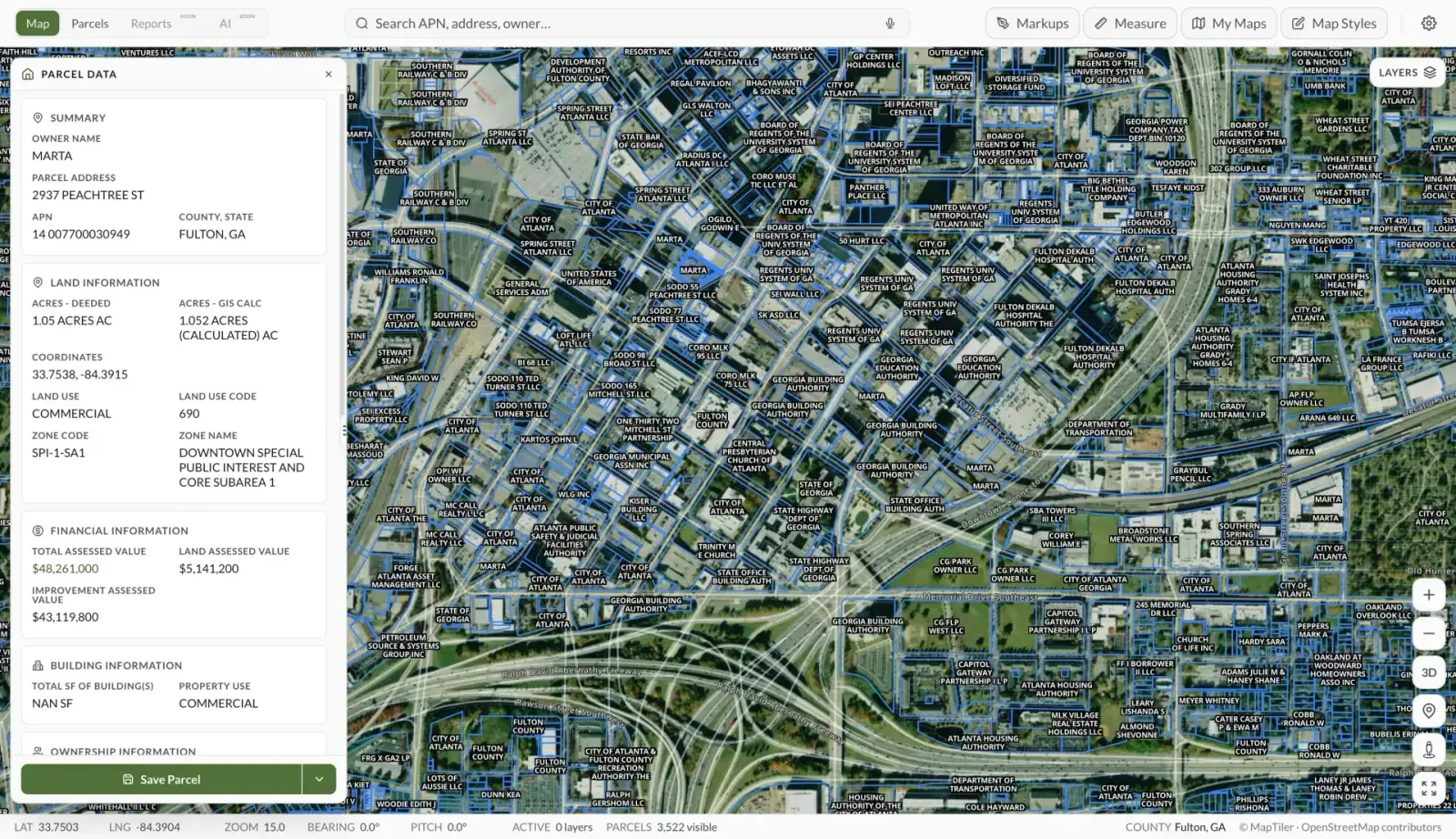
Land Owl overlays zoning, ownership, flood risk, and more on every parcel — before you commit a dollar.
How is a lot line adjustment different from a subdivision?
A subdivision creates new parcels; a lot line adjustment only reshapes existing ones — the parcel count stays the same or goes down. That distinction is why adjustments usually qualify for a faster, cheaper administrative review instead of full subdivision platting, public hearings, and improvement requirements.
Jurisdictions police the line carefully: an “adjustment” that effectively creates a new buildable lot will be treated as a subdivision. Exact thresholds and procedures vary by state and county.
What are the requirements for a lot line adjustment?
Typical conditions: both resulting parcels must still conform to zoning (minimum lot size, setbacks, frontage), no new parcels may be created, all affected owners must consent, and lienholders usually must subordinate or consent so mortgages attach to the right land.
Most jurisdictions require a survey, new legal descriptions, an application with fees, and recording of the approval and new deeds. Some add septic, access, or environmental review. The specifics vary widely by county, so get the local checklist first.
How much does a lot line adjustment cost?
Plan for surveying fees, application and recording fees, and often attorney or title fees for the new deeds — commonly a few thousand dollars in total, though complex sites or strict jurisdictions can push it higher. The survey is usually the largest line item.
Timelines run from a few weeks for simple administrative approvals to several months where additional review applies. Both cost and timeline vary enough by county that a call to the planning department is worth making before budgeting.
Can a lot line adjustment fix an encroachment?
Yes — it is one of the cleanest fixes. If a neighbor's garage, well, or driveway sits over the line, the owners can adjust the boundary so the improvement ends up on the right side, usually with compensation for the land transferred.
The alternative fixes — an easement for the encroachment, or litigation — leave a messier title. An adjustment permanently aligns the legal boundary with reality, which both title insurers and future buyers prefer.