
Why it matters when buying land
If you buy rural land, there is a good chance the deed describes it in metes and bounds — and the description is the property. Whatever the listing or the county GIS map shows, the recorded description controls what you actually own.
Old metes and bounds descriptions are a common source of boundary trouble: calls referencing vanished monuments (“the white oak,” “Smith's corner”), magnetic bearings that have drifted, and chains-and-rods units all invite ambiguity. Adjoining deeds written decades apart can overlap or leave gaps.
That ambiguity translates directly into risk — disputed acreage, encroachments, and title insurance exceptions. Knowing how to read the description, and when to bring in a surveyor, is basic self-defense for a land buyer.
How to check it
Pull the recorded deed from the county recorder and read the legal description against a map. You can roughly plot a metes and bounds description by hand or with free deed-plotting tools: start at the point of beginning and draw each bearing and distance in order — if the figure does not close, the description has a problem.
Compare the plotted shape and the deed's stated acreage with the county's mapped parcel. Large disagreements between deed and map are a signal to dig deeper before buying.
For anything that matters — a purchase, a build near a line, a dispute — hire a licensed surveyor. A boundary survey retraces the description on the ground, finds or resets the monuments, and is the only authoritative answer to where the lines actually run.
See it on a real parcel
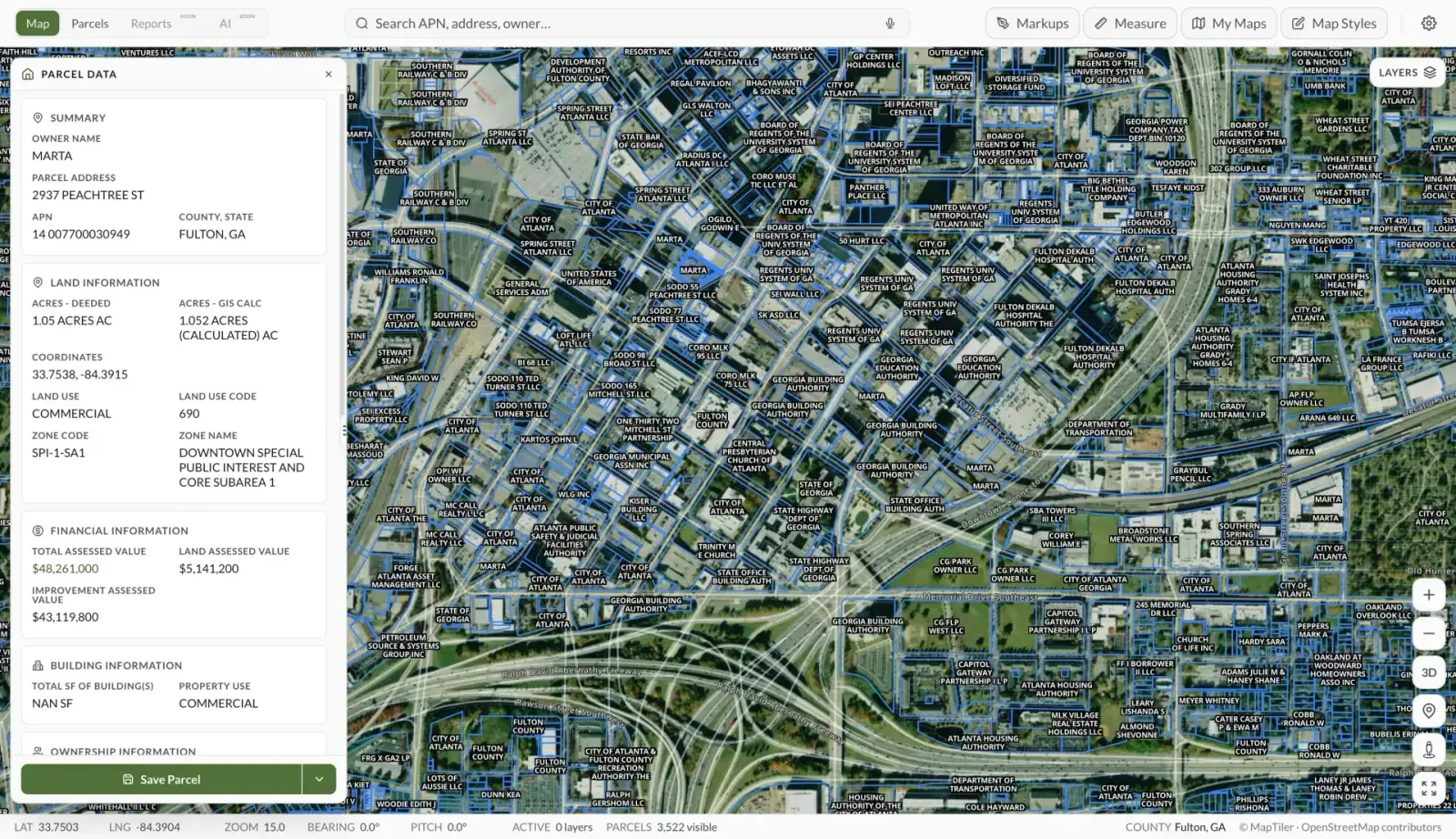
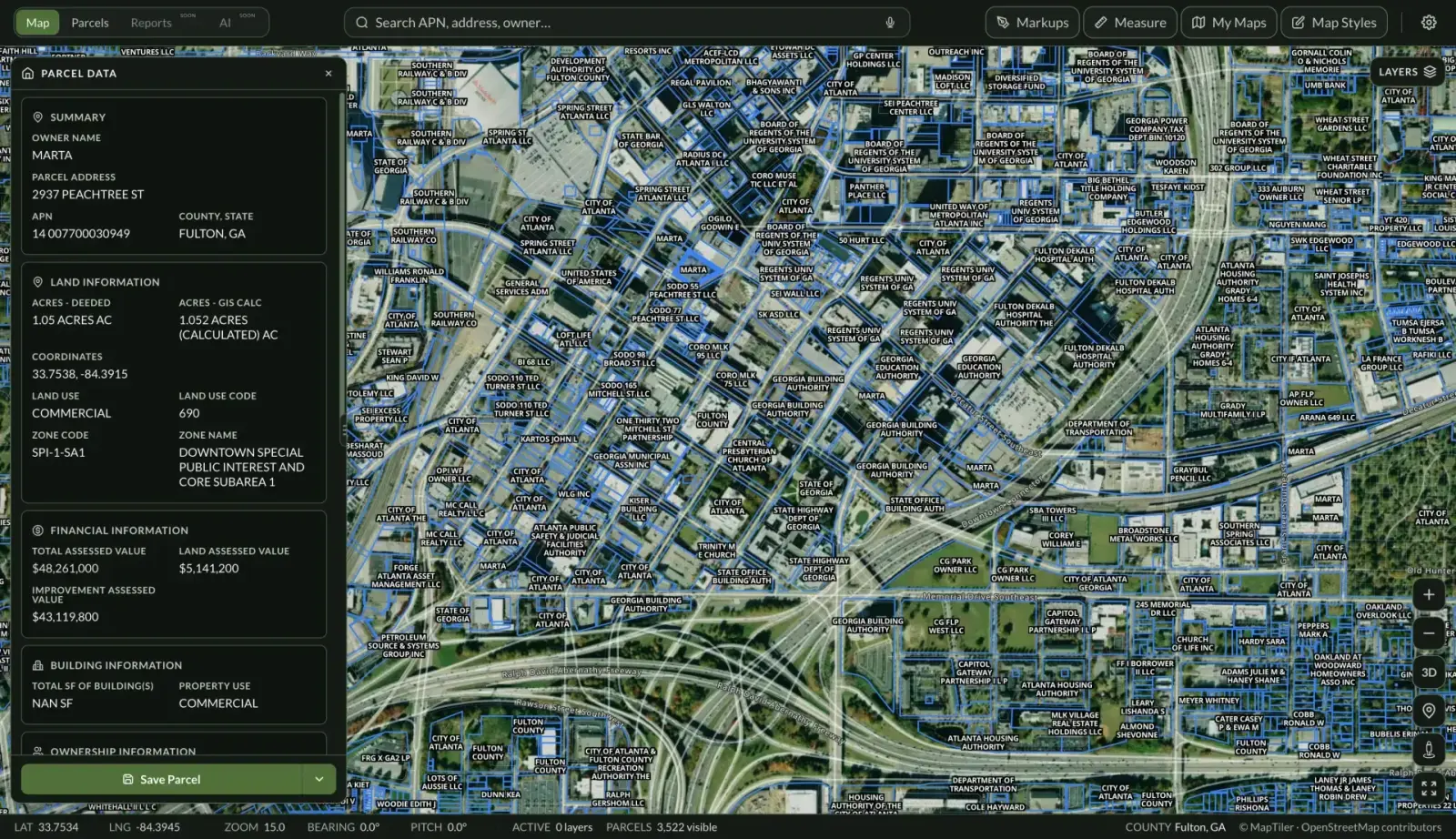
Land Owl overlays zoning, ownership, flood risk, and more on every parcel — before you commit a dollar.
How do I read a metes and bounds description?
Start at the point of beginning (POB) — a defined corner tied to a monument or a known reference. Then follow each “call” in order: a bearing like “N 45°30' E” (the direction, read as degrees east of north) and a distance like “250 feet,” often with references to monuments such as iron pins, stones, trees, or roads.
A valid description closes — the final call returns to the point of beginning. Older deeds may use chains (66 feet), rods (16.5 feet), or poles, and may reference monuments that no longer exist, which is where surveyors earn their fee.
What is the difference between metes and bounds and lot and block?
Lot and block (or “platted”) descriptions reference a recorded subdivision plat — “Lot 7, Block 3 of Sunny Acres” — so the geometry lives on the plat map rather than in the deed. Metes and bounds carries the full perimeter geometry in the deed text itself.
Most of the western U.S. also uses the Public Land Survey System (PLSS), describing land by township, range, and section. Rural parcels frequently combine systems — for example, a metes and bounds description of a piece within a named PLSS section.
Why do metes and bounds descriptions cause boundary disputes?
Because they depend on monuments and measurements that decay. Trees die, stones move, pins rust away, magnetic north drifts from the bearings written a century ago, and early measurements were simply less precise — so two surveyors retracing the same old deed can reach different lines.
Adjoining deeds drafted independently can also overlap or leave slivers of unowned land (“gaps and gores”). When deed elements conflict, survey law generally gives natural and artificial monuments priority over bearings, distances, and stated acreage — but resolving it is a surveyor's, and sometimes a court's, job.
Does the acreage in a metes and bounds deed control?
No — acreage is usually the weakest element of a description. Deeds commonly state acreage as “containing 40 acres, more or less,” and the perimeter calls (and above them, the monuments) control over the stated area when they conflict.
This is why surveyed acreage regularly differs from deeded acreage, occasionally by a lot. If you are paying by the acre, make the price contingent on a survey rather than the number written in a deed generations ago.