Why it matters when buying land
The listed market is only a slice of the land that could actually be bought. Many rural and vacant parcels never get listed at all — owners inherited them, forgot about them, or simply never got around to selling — so buyers who only browse listings compete for a fraction of the opportunity.
Off-market deals also change the negotiating dynamics. With no listing, no agent-set asking price, and often no competing buyers, prices are set by direct negotiation — which is why off-market acquisition is the core strategy for most land investors.
The trade-off is effort and diligence. You do the searching, the outreach, and the vetting yourself, and an unlisted parcel comes with no disclosures or broker — title, access, and condition are entirely yours to verify.
How to check it
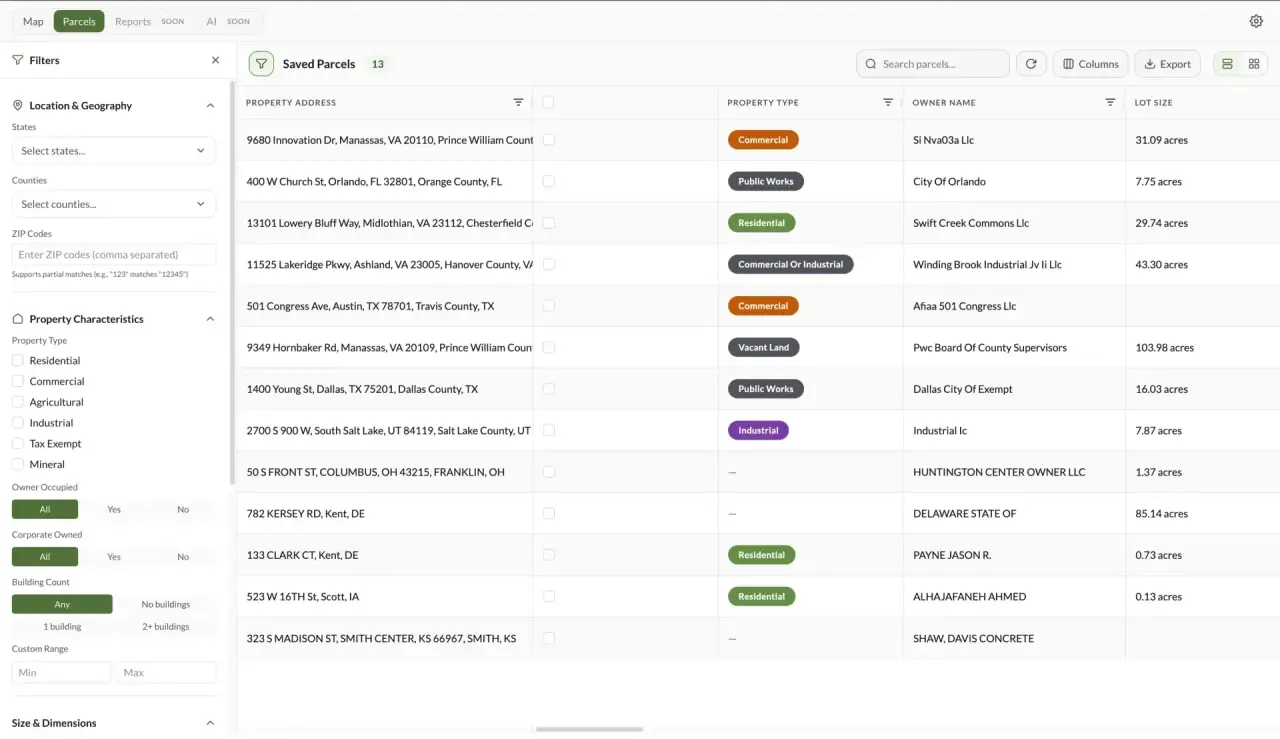
Finding off-market land starts with parcel ownership records. In Land Owl, the parcel ownership data shows who owns every parcel on the map — owner names, mailing addresses, and parcel characteristics — so you can identify candidates like absentee owners, long-held parcels, or owners of multiple lots in an area you want.
Then reach out: direct mail to the owner's mailing address is the standard channel, with calls (via skip tracing) and door-knocking as follow-ups. Expect low response rates; off-market sourcing is a volume game.
When an owner bites, run full due diligence exactly as you would on a listed property — title search, access verification, and a careful purchase contract. Off-market does not mean lower standards; it means you are the only one applying them.
See it on a real parcel
Land Owl overlays zoning, ownership, flood risk, and more on every parcel — before you commit a dollar.
How do I find off-market land deals?
Start with county parcel and ownership data and filter for motivated-seller signals: out-of-state or distant mailing addresses (absentee owners), parcels held for decades, tax-delinquent properties, estates, and owners with multiple scattered lots.
Then contact owners directly — mailing campaigns, calls, and local networking with farmers, foresters, and county officials all surface sellers. Driving target areas and noting neglected parcels (“driving for dollars”) still works for land, just slower.
Why would an owner sell off-market?
Convenience and circumstance. Many land owners do not want the hassle of listing a property they rarely think about — and an unsolicited, credible offer that handles the paperwork can be genuinely welcome, especially for inherited parcels, tax burdens, or owners who live far away.
Some sellers also value privacy or speed: no sign, no showings, no months on market. The owner trades potential top dollar for a simple, certain transaction.
Is off-market land cheaper than listed land?
Often, but not automatically. Off-market prices skew lower because there is no competitive bidding and many sellers prioritize ease over maximum price — discounts to retail value are the engine of the land-flipping business model.
But an owner with no urgency can also anchor to an unrealistic number, and some off-market parcels are unlisted precisely because they have problems (no legal access, wetlands, title defects). The discount must survive due diligence to be real.
What should I watch out for in an off-market deal?
Everything a listing process would normally surface. Verify the person you are negotiating with actually holds title — heirs, co-owners, and trusts complicate rural ownership — and order a title search before closing. Confirm legal access, check for liens and back taxes, and inspect the land in person.
Use a written purchase agreement and close through a title company or attorney (practices vary by state) rather than handling deeds informally. The savings of an off-market deal disappear quickly into an uninsurable title or a landlocked parcel.